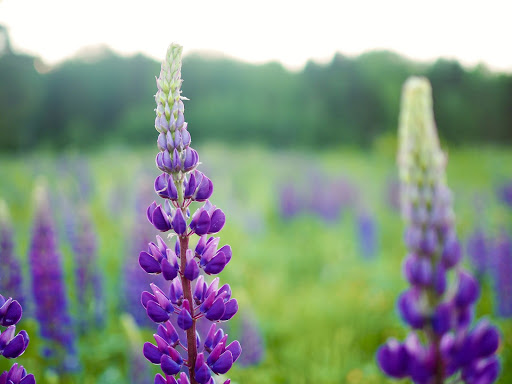

Top Pacific Northwest Native Plants For Your Garden

Native plants are always a great addition to the landscape. They require less water and create shelter and food for wildlife while looking good at the same time.

Gardening with native plants can create a healthier and more beneficial environment for everyone.

Landscaping choices affect the populations of birds and the insects they need to survive.  If your garden has no native plants, it becomes an ecological desert for pollinating insects that are essential to our survival.

Native plants are adapted to our environment, so keeping them alive year-round may not be as difficult in the long term as more cultivated plants.

Here are some of the top native plant picks for our area:
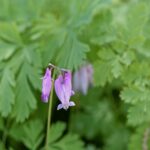
native-plants

Pacific Bleeding Heart (Dicentra formosa)
Pacific bleeding heart, of course, has pink heart-shaped blooms. This native plant grows easily. Hummingbirds are attracted to the flowers. The leaves emerge from the ground from February to March, and it starts to bloom in late March. It grows up to 2 ft. It can spread and does well in moist shade.
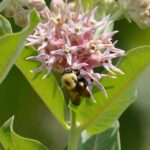
Bee on pink milkweed flower.

Showy Milkweed (Asclepsias speciosa)
Showy milkweed is a unique addition to any landscape. It has round pink flowers in a ball shape that attract pollinators. Showy milkweed does best in the open sun with moist, fertile soils and low competition from taller plants.
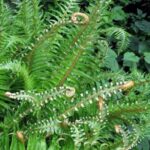
Lush green fern leaves

Sword Fern (Polystichum munitum)
Sword fern has toothed leaves and brown spores underneath. It does well in the sun or shade. Most plants reach 4 – 6 ft. Fiddleheads or small fronds emerge in the spring. It is used as a ground cover and can adapt to a wide range of soils and conditions. The Sword Fern can also prevent erosion by stabilizing soils in hilly areas.
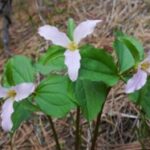
White trillium wildflower

Western trillium (Trillium ovatum)
This spring perennial flower grows to about 1- 1.5 ft. It can grow in partial shade to full sun and tolerates wet soil. The flowers go from white to pink as they fade. Wildlife enjoys eating the seeds.
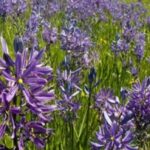
Purple camas flowers blooming

Common Camas (Camassia quamash)
Camas is a well-known native flower that attracts pollinators like butterflies and hummingbirds in the spring. The bulbs are planted in the fall. Camas is drought tolerant and does best in full sun. These beautiful plants grow 8 to 28 inches tall and 6 inches wide.
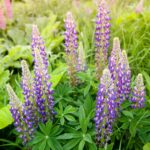
Purple and blue lupine flowers

Broadleaf Lupine (Lupinus latifolius)
This top-notch, drought-tolerant evergreen perennial has blue-violet flowers in spring. Lupines are perfect for the back edge of a bed. These plants can grow between 2 – 3 feet tall and up to 3 feet wide. Lupines grow best in full sun and well-drained soil.
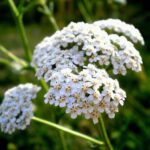
Yarrow white bloom

Yarrow (Achillea millefolium)
Yarrow is a low-maintenance native herb that benefits the ecosystem. It has small, flat-topped heads of flowers at the tops of the stems that attract native bees and other pollinators. Yarrow is drought tolerant and likes the full sun. They are also great as a cut flower. These plants grow up to 3 feet wide and 2 feet across.
Top Pacific Northwest Native Shrubs For Your Garden

Top Pacific Northwest Native Shrubs For Your Garden

Gardening in the Pacific Northwest means working with a climate that ranges from wet, temperate zones to drier inland areas. Native shrubs are a practical choice because they thrive in these local conditions while reducing the time and resources needed for upkeep. We recommend a range of shrubs that thrive in the Pacific Northwest’s unique climate while providing seasonal interest and benefits to local wildlife.

If you are looking for a way to use fewer pesticides, less water, and create shelter and food for wildlife, then native shrubs may be a great addition to your garden.

Some Benefits of Native Shrubs

  • Native shrubs are adapted to our environment. This means keeping them alive year-round may not be as difficult in the long term as more cultivated plants.
  • They don’t require as much water and can also reduce rainwater runoff and even erosion in the landscape.
  • They provide nectar, pollen, and seeds that serve as food for pollinators and other animals.
  • They conserve water because they are adapted to our area.
  • They do not require fertilizers and require fewer pesticides than lawns.
  • Native plants do not require mowing. Excessive carbon is created by lawnmowers and other gas-powered equipment and can contribute to global warming. These plants actually remove carbon from the air.
  • Native plants provide shelter and food for wildlife.

Some Top Native Shrubs for the Pacific Northwest:

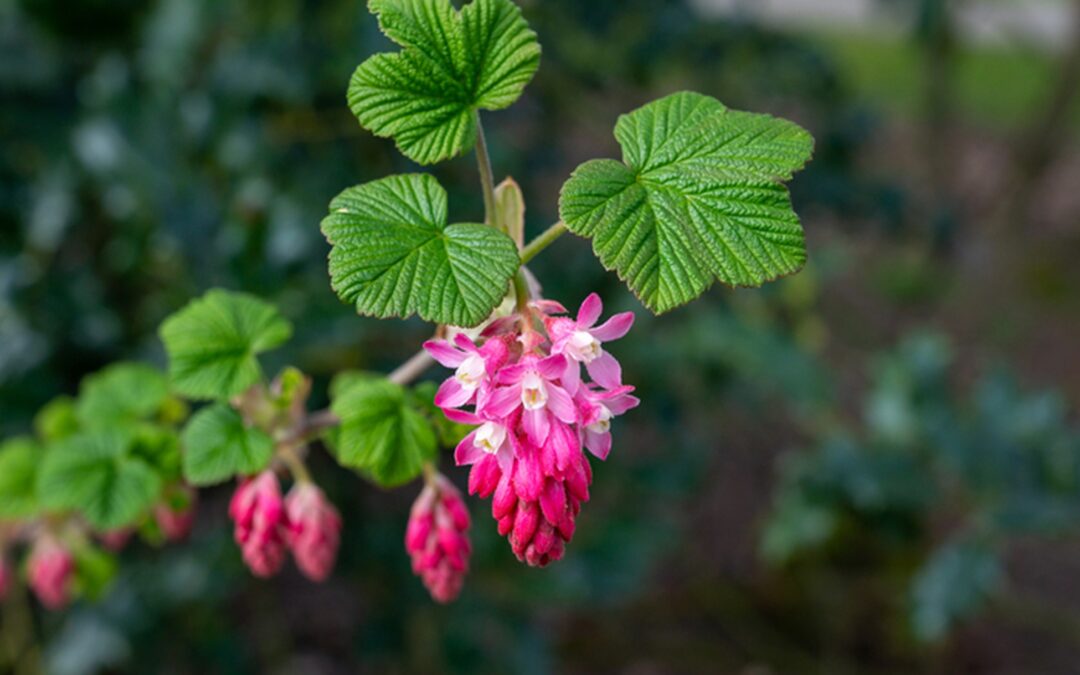
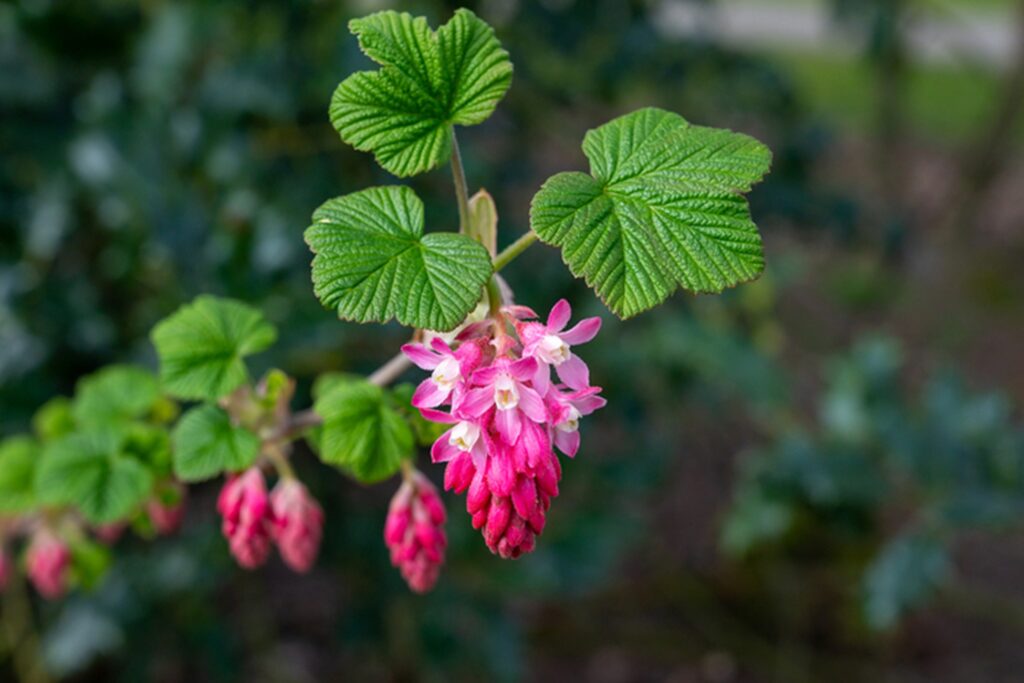
Red-flowering Currant (Ribes sanguineum)

Red flowering currant is one of the showiest native shrubs available, producing vibrant clusters of deep pink to red flowers in early spring. These early blooms attract hummingbirds when little else is flowering. It typically grows between 6 and 12 feet tall and forms a rounded shape, making it a standout feature in both naturalized and formal gardens.

Planting tips:

Prefers well-drained soils and partial sun. Plant in early spring for best establishment.

Care guidance:

Water regularly during the first year, then reduce watering as it becomes established. Prune after flowering to maintain shape.

Companion plants:

Pair with sword fern (Polystichum munitum) and red columbine (Aquilegia formosa) for vibrant seasonal displays.

Oceanspray (Holodiscus discolor)

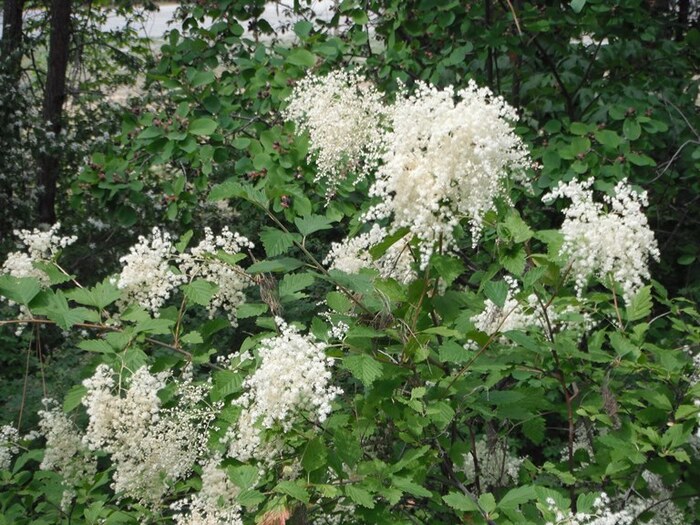
Oceanspray has cascading, creamy-white flower clusters and an arching habit. It is also known as Ironwood due to the strength of its wood. It can range from 2- 20 ft. tall. Oceanspray is drought tolerant and likes the sun. It blooms in June and July.

Tall Oregon Grape (Berberis aquifolium) 

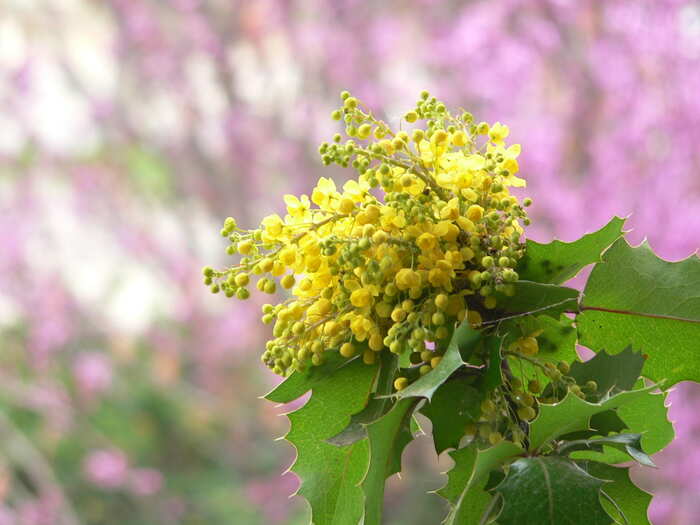
Tall Oregon grape is a hardy evergreen shrub with leathery, spiny leaves that bring year-round greenery to woodland and partial-shade gardens. It produces vibrant yellow flowers in early spring that attract pollinators, followed by blue-black berries that support native birds. This shrub typically reaches 3 to 5 feet tall and slowly spreads via underground stems, making it effective for naturalizing shady areas and controlling erosion.

Planting tips:

Prefers partial to full shade with moist, well-drained, acidic soils. Excellent for underplanting in coniferous forests or shady borders.

Care guidance:

Requires minimal care once established. Occasional pruning can be done in early spring to shape and remove any damaged stems.

Companion plants:

Combines well with salal (Gaultheria shallon) and sword fern (Polystichum munitum) for a cohesive woodland look.

Red-osier Dogwood (Cornus sericea or Cornus stolonifera)

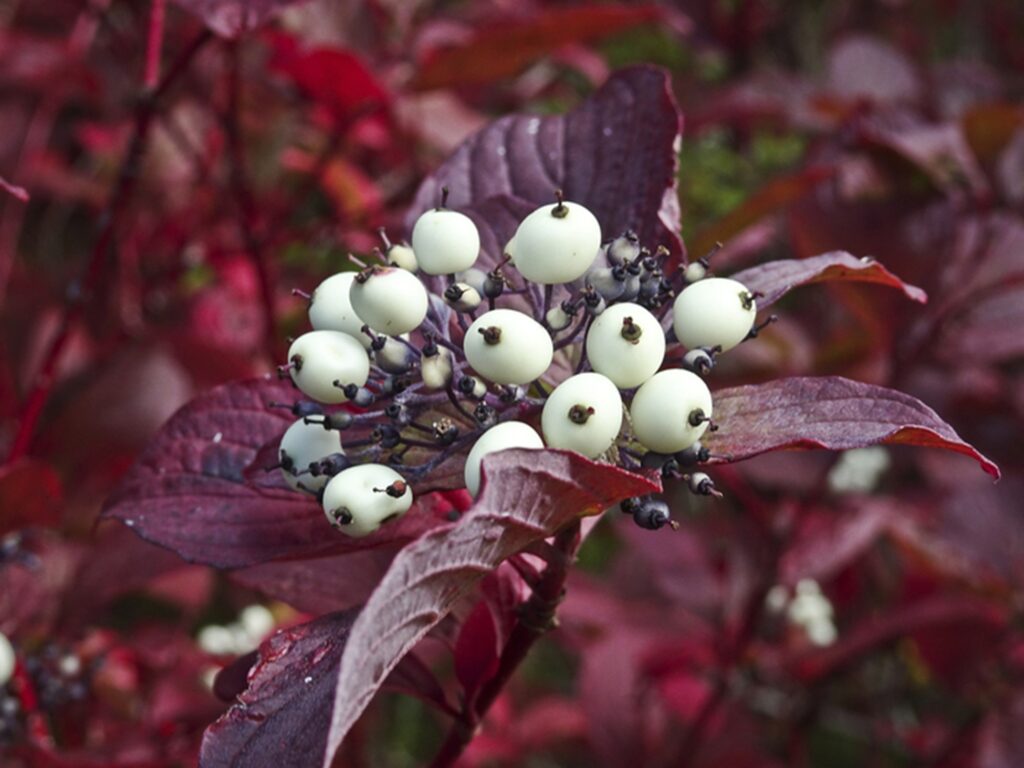
This fast-growing shrub has year-round interest. Its red twigs are pretty, followed by leaves of reddish burgundy. The white flowers are sometimes present with the white berries. Birds are attracted to Red-osier Dogwood. It likes fairly wet soil and can grow in full sun from 3 – 18 ft. tall.

Pacific Ninebark (Physocarpus capitatus)

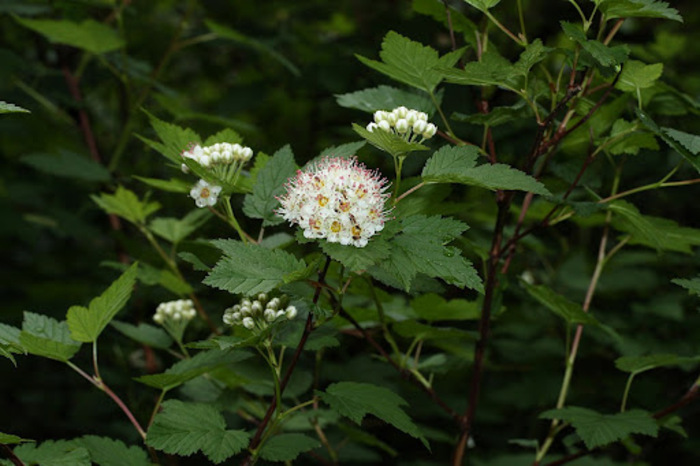
This native shrub has year-round interest. Pacific Ninebark has glossy leaves and puffy white flowers that turn red in the fall and then to yellow seeds. The leaves turn reddish-brown. In the winter, the branches have peeling reddish-colored bark. This shrub can be planted in the sun or shade. It grows 10-15 ft. tall and is attractive to butterflies.

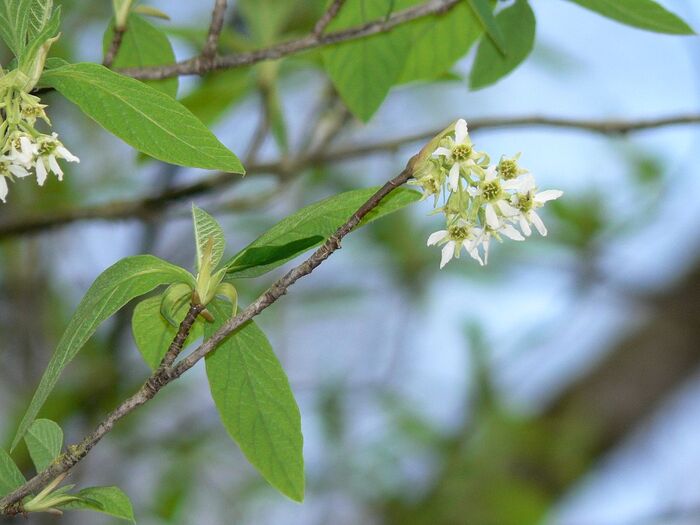
Indian Plum (Oemleria cerasiformis)

The Indian Plum is attractive to birds such as cedar waxwings and is also eaten by mammals. It grows as a multi-stemmed shrub to between 5 – 20 ft. tall. You need male and female plants for fruit. The bittersweet small fruit ripens in the fall and can provide winter feed for birds and other wildlife. It is one of the first shrubs to flower in the spring (February). It attracts bees and flies as pollinators.

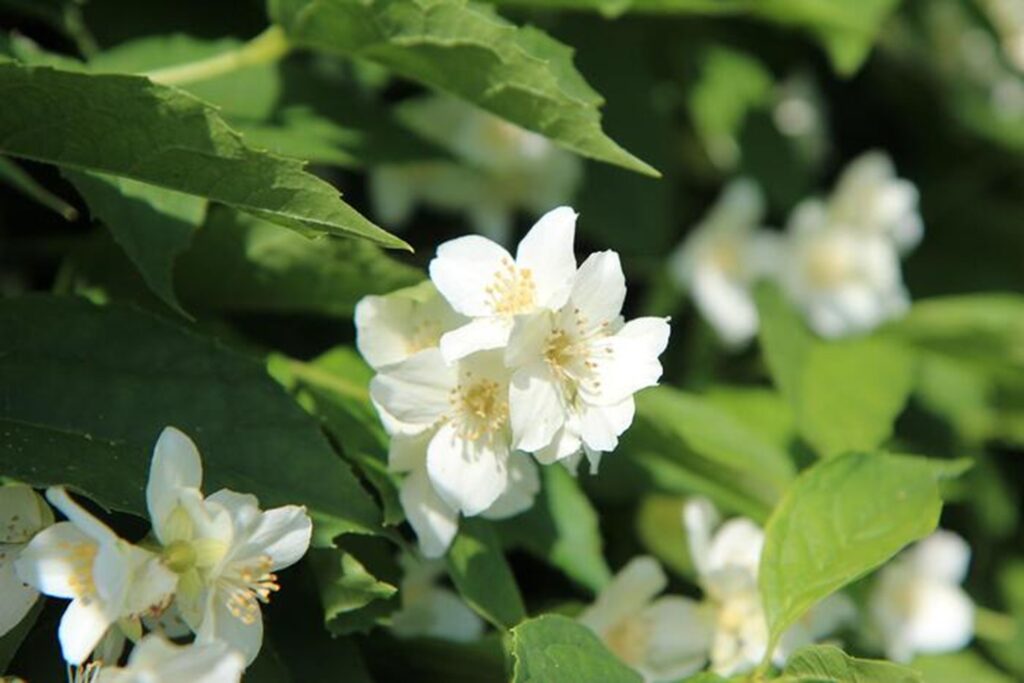
Mock Orange (Philadelphus lewisii

Mock orange is known for its fragrant white flowers that appear in late spring or early summer. The intoxicating scent makes it a favorite for pathways or sitting areas where the fragrance can be enjoyed. Growing between 6 and 10 feet tall, it adapts well to both full sun and partial shade.

Planting tips:

Plant in full sun to partial shade in moist, well-drained soil.

Care guidance:

Prune after flowering to encourage vigorous new growth and rejuvenate older stems every few years.

Companion plants:

Complements nodding onion (Allium cernuum) and oceanspray (Holodiscus discolor) in mixed borders.

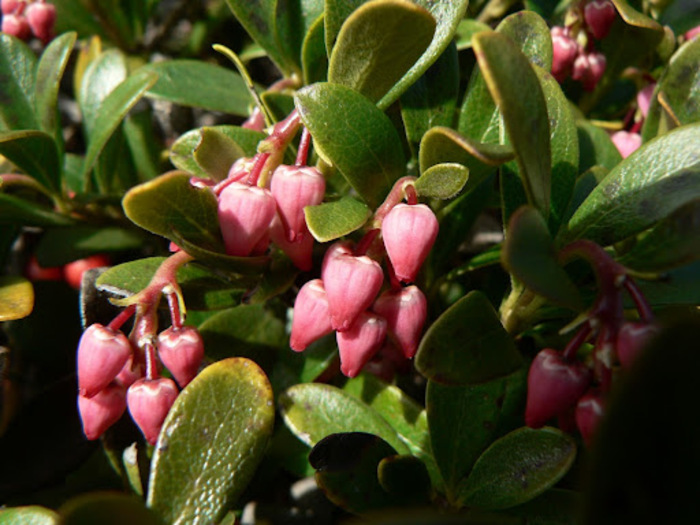
Kinnikinnick (Arctostaphylos uva-ursi)

This native evergreen shrub not only has a fun name but is also attractive to birds and insects.  Kinnikinnick is low maintenance and has pink hanging bell-shaped flowers that bloom in the spring. The red berries appear from July and last through winter. This plant prefers sun and well-drained soil but can also tolerate some shade and soil variation. Kinnikinnick is used as a groundcover and grows up to 3 ft. wide.

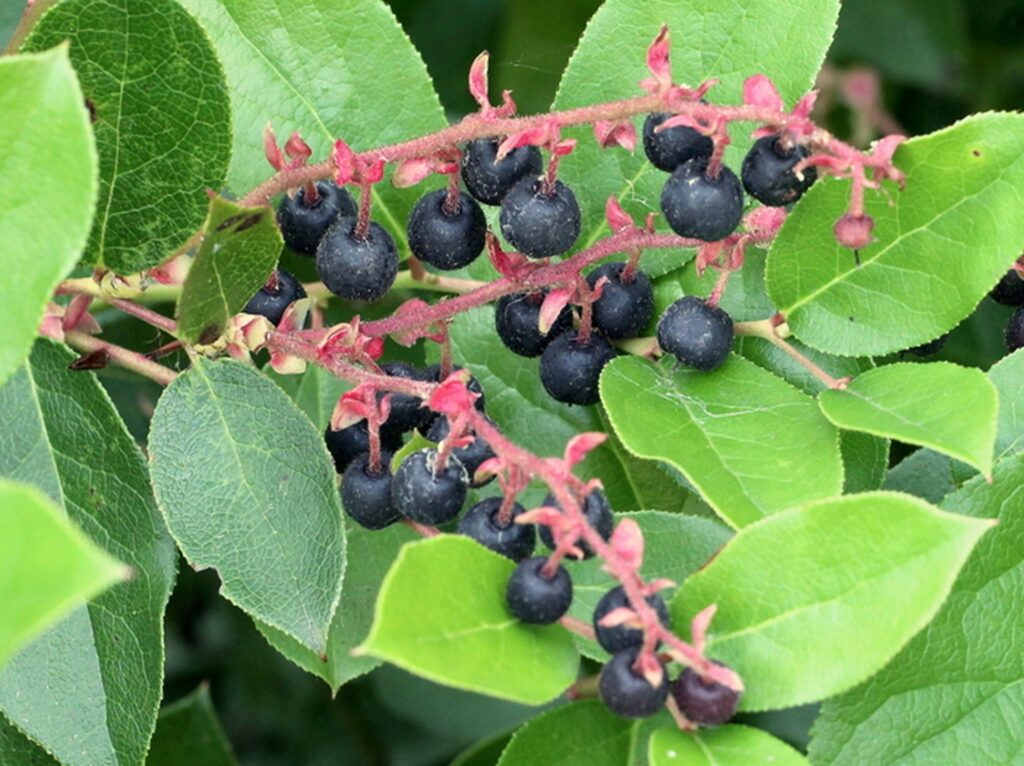
Salal (Gaultheria shallon)

Salal is also known as Oregon wintergreen and is an evergreen native shrub. Salal can grow to over 6 ft tall in the shade and 3 ft. in the sun. It has urn-shaped flowers that are white to pink in color and bloom in April and May. The edible (but mealy), dark-purple berries ripen from July to September. As a common forest understory shrub deer and elk eat the leaves mostly in winter. The berries are eaten by birds and squirrels and the flowers attract hummingbirds.

Planting tips:

Best planted in partial to full shade with moist, acidic soil.

Care guidance:

Water consistently until established; prune sparingly to control spread if needed.

Companion plants:

Ideal alongside vine maple (Acer circinatum) and deer fern (Blechnum spicant).


Top Native Shrub - Snowberry

Snowberry (Symphoricarpos albus)

Snowberry offers unique white berries that persist into winter, providing visual interest when most other plants have gone dormant. This shrub grows 3 to 6 feet tall and features small pink flowers in summer.

Planting tips:

Tolerates a wide range of soils, including poor and rocky soils; prefers partial shade but adapts to full sun.

Care guidance:

Prune in late winter to early spring to prevent legginess and encourage healthy growth.

Companion plants:

Pairs well with western bleeding heart (Dicentra formosa) and thimbleberry (Rubus parviflorus).

Top Native Shrub - Blue Elderberry

Blue Elderberry (Sambucus cerulea)

Blue elderberry grows quickly into a large, arching shrub or small tree up to 20 feet tall. It features large clusters of white flowers and deep blue berries.

Planting tips:

Plant in full sun in well-drained soil; tolerates dry conditions once established.

Care guidance:

Prune in late winter to maintain size and shape; cut back older stems to encourage vigorous new growth.

Companion plants:

Suitable with mock orange (Philadelphus lewisii) and goldenrod (Solidago canadensis).

Top Native Shrub - Prostrate Ceanothus

Prostrate Ceanothus (Ceanothus prostratus)

Prostrate ceanothus is a low-growing evergreen shrub with bright blue flowers in spring, making it ideal as a groundcover.

Planting tips:

Prefers full sun and dry, well-drained soil; great for rock gardens and slopes.

Care guidance:

Requires minimal care; avoid excessive watering once established.

Companion plants:

Pairs beautifully with kinnikinnick (Arctostaphylos uva-ursi) and yarrow (Achillea millefolium).

FAQs About Pacific Northwest Native Shrubs

Can I plant these shrubs in full shade?

Several shrubs like salal and snowberry thrive in shaded environments, while others like elderberry and ceanothus prefer full sun.

What shrubs produce berries safe for backyard harvest?

Salal and elderberry produce edible berries, though elderberries must be cooked before consumption. Always verify edibility before harvesting.

How should I prune these shrubs?

Prune in early spring to remove dead branches and encourage new growth. Species like mock orange benefit from occasional rejuvenation pruning.

Are these shrubs suitable for small urban gardens?

Yes, many species like salal, snowberry, and prostrate ceanothus are compact enough for smaller spaces and container gardening.

Supporting a Healthy Garden Ecosystem with Native Shrubs

Planting native shrubs in Pacific Northwest gardens provides lasting ecological benefits while creating visually appealing landscapes. With proper placement and basic maintenance, these shrubs offer year-round beauty, support pollinators, and help conserve water resources.

At Frontier Landscaping we can help you design and install a native plant garden or incorporate more native plants into your existing landscape. Give us a call for a free consultation at (360) 574-8979.

Now is the Time to Plan and Plant Your Winter Garden

Now is the Time to Plan and Plant Your Winter Garden

Fall is a wonderful time to add to your garden and prepare it for winter. Plants are less likely to get transplant shock than when planted in the warmer months, and there is no lack of rain to help establish good, strong root systems.

As we head towards winter and the leaves are falling, you may be noticing that your garden doesn’t have many flowers left. Perennials have finished blooming and are dying back. Most shrubs are also coming to the end of their flowering season. But a winter garden can also be filled with blooms. Careful selection of the right plants can ensure you a beautiful landscape all the way through the season.

Here are some plant selections that will thrive in the Pacific Northwest and bring beauty to your winter garden.

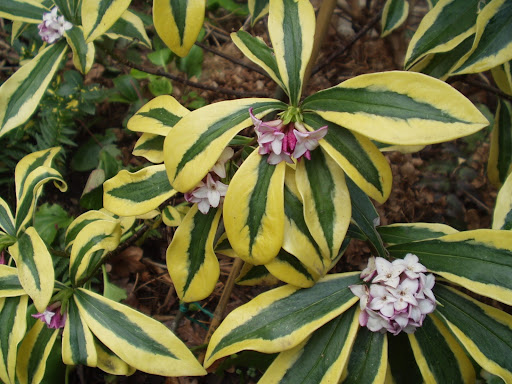
Image of several Daphne flowers amidst pretty yellow-green foliage, great options for a winter garden.

Daphne odora ‘Maejima’

Daphne odora ‘Aureo-marginata’

Variegated winter Daphne is a wonderful winter garden choice for our climate. There are many beautiful cultivars available for this plant. This evergreen shrub offers pretty, variegated foliage throughout the winter and will bloom in February and March and sometimes later. The flowers are highly fragrant and emerge in clusters of pink buds, opening to pale pink or white star shaped flowers.

Be sure to plant this shrub where it will get some afternoon shade and where drainage is good – in a raised bed or on a slight berm. Daphne enjoys rich, moist soil and infrequent watering throughout the summer months, once it is established. It is slow growing, so planting a bigger specimen is advised. It will grow to a height of 3-4 feet and a width of 2-4 feet.

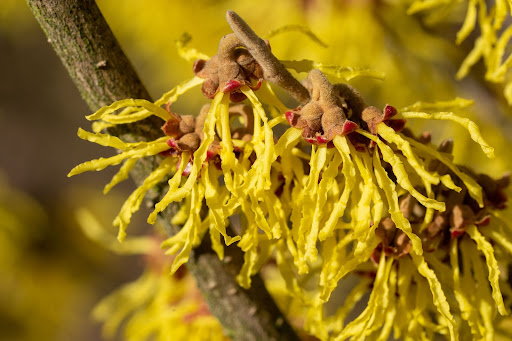
Close up image of the bright yellow spider-like blooms of Witch Hazel, a great option for an addition to a winter garden.

Hamamelis x intermedia

Witch Hazels are a must for any winter garden. They start to bloom around January or February, depending on the species. There are many beautiful cultivars that will light up your winter garden, even when there is snow on the ground. Hamamelis x intermedia ‘Diane’ has deep orange and red flowers, and Hamamelis x intermedia ‘Arnold Promise’ has bright yellow spider-like blooms. Plant in full sun to part shade. These shrubs like moist, well-drained, acidic soil. Avoid letting the soil dry out. Witch Hazels also provide beautiful fall foliage colors for the landscape.

These luminous, deciduous shrubs come in various sizes but tend to reach around 12-15 feet tall and wide. Their flower color ranges from bright yellow to burnt orange or deep red. Hamamelis x intermedia varieties tend to have a longer bloom time with showier flowers than other species.

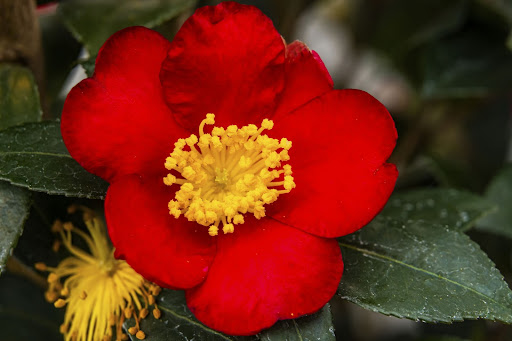
Close up image of a vibrant red Yuletide Camellia bloom with a bright yellow center, a great choice for your winter garden.

Camellia sasanqua ‘Yuletide’

The Yuletide Camellia is a great addition to bring color to a winter garden. It provides festive, bright red flowers, contrasting with deep green foliage during the holiday season and beyond. In fact, Camellia species in general are a great choice for winter gardens, providing attractive, glossy evergreen foliage and bright blooms of all colors. Sasanquas are particularly pretty, with their large, elegant blooms. 

Camellia sasanqua ‘Yuletide’ should be planted in partial shade or filtered sun and in rich, acidic and well-drained soils. It is a moderate growing shrub, reaching around 5-8 feet tall and wide. It likes moderate and regular watering.

For more help selecting, planning and planting a winter garden, contact Frontier Landscaping.

Select the Best Shrubs for Fall Color

Select the Best Shrubs for Fall Color

There are so many tree species to choose from to add bright, vibrant, fall foliage color to your landscape. You may also want to consider adding some deciduous shrubs that will light up your garden in autumn. There are so many to choose from that making a selection can be confusing. It is worth strolling around your neighborhood in the fall to make note of the plants that are putting on their attractive seasonal display.

Here are some suggestions for deciduous shrubs that will give you bright reliable fall color here in the Pacific Northwest.

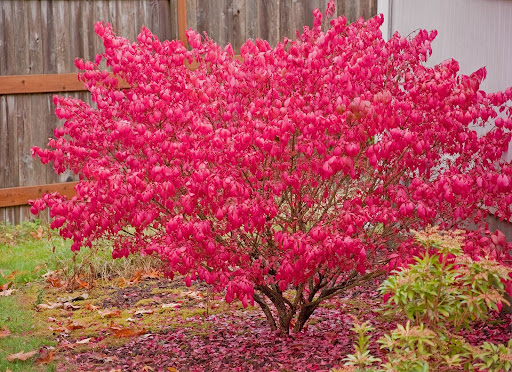
Image of a bright red Burning Bush or Euonymus elata, a great choice of shrubs for fall color.

Euonymus alatus 

The first choice of shrubs for fall color has to be the Burning Bush (Euonymus elata). This shrub grows so easily here – it is planted in parking lots and parking strips. It can also be planted as a hedge or as an individual specimen in mixed planting beds. You may have seen its bright luminous pink or red fall color blazing as you drive around town.

This shrub has attractive, deep green elliptical leaves and graceful branches that grow in a fountain shape, drooping down at the ends. E. alatus grows to a height and spread of 10-15 feet. 

There is a smaller variety available if you don’t have space for a large shrub. Euonymus alatus ‘Compactus’ grows to a height and spread of 9-11 feet. Both of these shrubs like to be planted in full sun or part shade, preferring well-drained soil, while tolerating a range to different soil types. This shrub produces red berries that birds will enjoy in the fall.

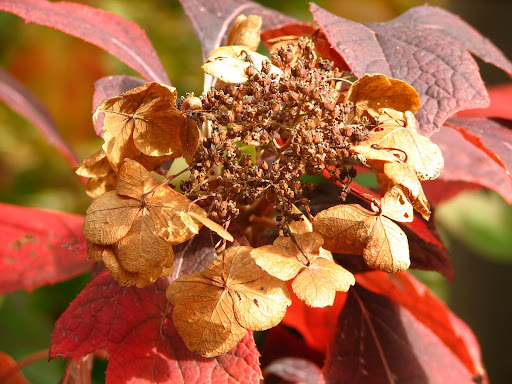
Close up image of the flower of the Oakleaf Hydrangea or Hydrangea quercifolia, a great option of shrubs for fall color.

Hydrangea quercifolia

The Oakleaf Hydrangea is a wonderful shrub to bring fall color to Pacific Northwest landscapes. There are many cultivars available in various sizes – you can be sure to find one to suit your garden. 

Hydrangea quercifolia works well in woodland landscapes and doesn’t look as formal as the other Hydrangea species. The leaves are large and have a lobed shape, similar to that of many oak leaves. 

From May to July, the Oakleaf Hydrangea develops large panicles of beautiful white, cream, or red flowers, depending upon the cultivar you choose. In the fall, the leaves turn an attractive deep red with shades of orange and purple. These shrubs should be planted in full sun to part shade. They like rich and well drained soils with consistent soil moisture. The species Hydrangea quercifolia grows to a height and spread of 6-8 feet.

There are many beautiful cultivars of Hydrangea shrubs for fall color available:

Hydrangea ‘Ruby Slippers’ has flowers that emerge white and then deepen to a dark pink. In the fall, the leaves turn a glowing red-brown color. This shrub grows to 3.5 feet tall with a spread of 4-5 feet.

Hydrangea ‘Munchkin’ is another dwarf variety that grows to a height and width of 3 to 4.5 feet. It prefers filtered light to partial shade. The blooms emerge bright white in color and mature to pink as summer continues. The leaves turn a brilliant deep red in fall. 

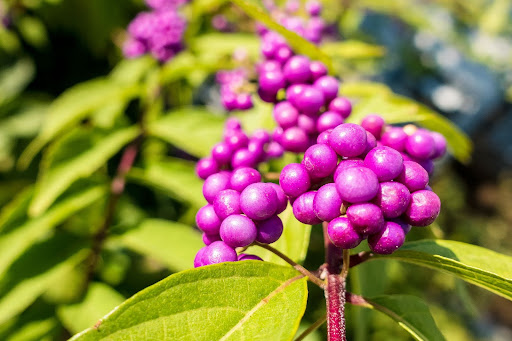
Close up image of the bright purple berries of the Beautyberry or Callicarpa americana, a great option of shrubs for fall color.

Callicarpa americana

The last selection is also known as Beautyberry. This unique shrub has much to recommend it – vivid green foliage on arching, long branches in the spring, tiny clusters of lavender flowers in the summer (July-August), and bright magenta berries, highlighted by luminous yellow foliage colors in the fall. 

This shrub grows to a height and spread of 3-6 feet – a good size for many landscapes. Plant it in full sun to light shade and in moist soil enriched with compost. This plant will grow well in clay soils. 

Contact Frontier Landscaping for help selecting the right shrubs to bring fall color to your landscape.

Focal Point Landscaping

Focal Point Landscaping

Choosing a Focal Point Tree for Your Landscape

Focal point trees are trees that you can plant in your landscape that catch your eye and create beauty and drama throughout the seasons. Ideally, they shouldn’t be too big, unless you have a large property. Plant fairly close to your house, courtyard, or patio for maximum enjoyment. They can be planted in the ground – in a lawn, planting bed, or along a path. Depending upon the layout of your yard, another option is to plant in containers or raised beds.

Ideally, you’ll want to be able to glance out of your window and enjoy spring or summer flowers or bright fall colors. Focal point trees are usually broad-leaved deciduous trees that will bring seasonal change in the spring through to the fall. Some trees may even provide winter interest, providing interesting, leafless silhouettes and bark textures.

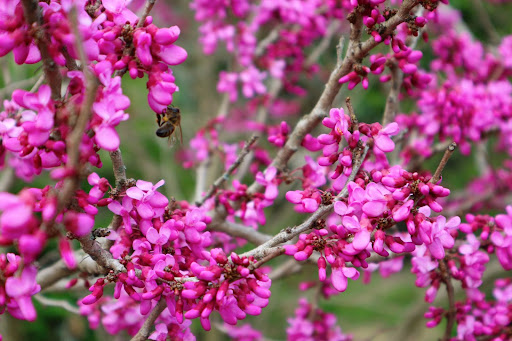
Image of the tiny bright pink flowers of the Cercis 'Forest Pansy' Redbud Tree - a great choice for a focal point landscaping project.

Show Stopping Spring, Summer, and Fall Color

There are quite a few small or medium sized tree choices that will provide you with almost year-round interest in the garden. Trees such as redbuds, ornamental cherry trees, crape myrtles, and even Japanese maples will give you enjoyment for much of the year.

Enhance Your Focal Point Landscaping with these Vibrant Tree Selections:

Redbud (Cercis canadensis)

There are many new cultivars of the Eastern redbud now available. Some are upright and some weeping, with beautiful cascading branches. Redbuds bloom in early spring with bright lavender-pink flowers along the branches, before the attractive, heart-shaped leaves unfurl. These trees are wonderful for wildlife and pollinator gardens, as they attract bees and hummingbirds, and birds feed on the long seed pods. Redbuds fit in well with PNW and woodland garden design styles.

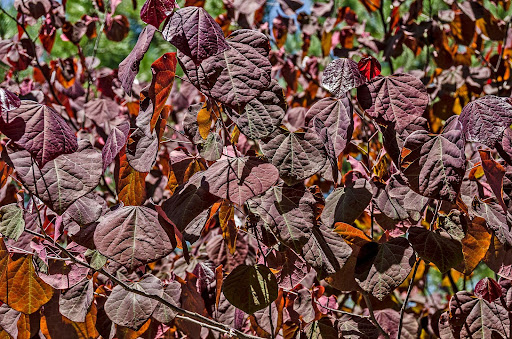
  • Cercis ‘Forest Pansy’ is a beautiful upright tree that grows 20-25’ tall and wide. It provides a show-stopping flower display in the spring. This is followed by striking burgundy leaves, and then a glowing golden yellow foliage display in fall.
  • Cercis ‘Ruby Falls’ grows to around 6-8’ tall and 5-6’ wide. Like ‘Forest Pansy’ it also has the delicate, typical pea-family flowers clustered along its weeping branches in spring. These are a slightly pinker hue than those of ‘Forest Pansy’. The blooms are followed by deep purple leaves emerging along the branches, creating a wonderful cascading display in spring and summer. This is followed by luminous yellow fall color. The bare silhouette also provides interest in a winter garden.
Image of the striking burgundy leaves of the Cercis 'Forest Pansy' Redbud Tree - a great choice for a focal tree landscaping project.

Japanese Maples (Acer species)

Japanese Maples are an obvious choice for a focal point tree. There are plenty of cultivars that are small, both upright and weeping. They work well in Japanese-style gardens, woodland, or PNW gardens. Here are a couple of notable ones:

  • Acer ‘Emperor 1’ is a wonderful choice for the Pacific Northwest. It grows up to 10-15’ tall and wide. The open, elegant crown doesn’t need much pruning. Its leaves emerge bright red in spring, deepening to an attractive purple. Plant where the tree can be backlit by early morning or late afternoon sun, which makes the foliage glow. The fall foliage display is a spectacular crimson red.
  • Acer ‘Orangeola’ is a lace leaf maple and a spectacular choice for a focal point tree in a courtyard or small garden. It is also a good option to grow in containers or in the ground. It grows 4-8’ tall and 3-7’ wide. The leaves, which are deeply divided, emerge bright orange in the spring. They mature to a deep red, with highlights of green and orange in the summer. A fantastic burnt orange and fiery red appears in the fall.
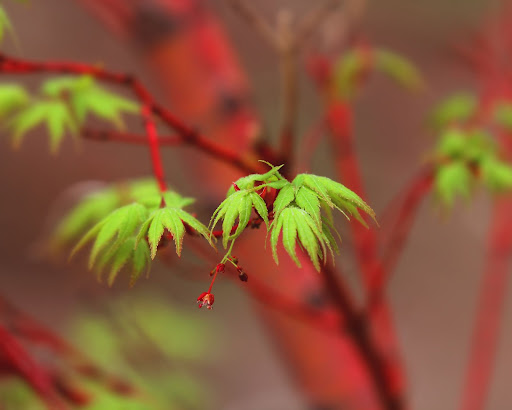
  • Acer ‘Sango Kaku’ is a great choice for year round interest. It grows to a height of 15-25’ tall and 15-20’ wide. This Coral Bark Maple provides a stunning upright silhouette in the winter with it’s beautiful orange-red bark. The leaves emerge a beautiful light green in the spring. In fall, the leaves turn a light, luminous yellow with tinges of orange, pink, and red at the margins.
Close up image of the light green leaves of the Coral Bark Maple or Acer 'Sango Kaku' Tree - a great choice for a focal tree landscaping project.
There are many other trees that make great focal points in the garden. Check out our blog on crape myrtles, for another great selection for a focal point tree in a hot, sunny location.

Frontier Landscaping can help you to enhance your property with focal point landscaping and aid you in planning and installing your landscape. Contact Frontier Landscaping today for more information.

Deer Resistant Plants for Your Yard

Deer Resistant Plants for Your Yard

There is no such thing as deer-proof plants. Deer in different locations will graze on different plants, depending upon how hungry they are and what else is available for them to eat. Plants that are newly planted out directly from a nursery are usually tastier to deer than plants that have been in the ground for a while, as they have been fed regularly with fertilizer.

Often newly planted landscapes can be devastated when deer find them. It is better to use the phrase deer-resistant plants. This term describes plants being resistant to deer to a greater or lesser extent.

So bear in mind that our suggestions for deer resistant plants may still get nibbled by deer, but are less likely to be eaten than other plants that deer are naturally drawn towards. There are topical sprays that are distasteful to deer that can be applied to the foliage of plants Unfortunately they also smell terrible to people! But these can be used to discourage deer from eating your plants if applied regularly. However, it is probably easier to choose plants that deer find distasteful.


Deer Resistant Plants for Pacific Northwest Gardens:

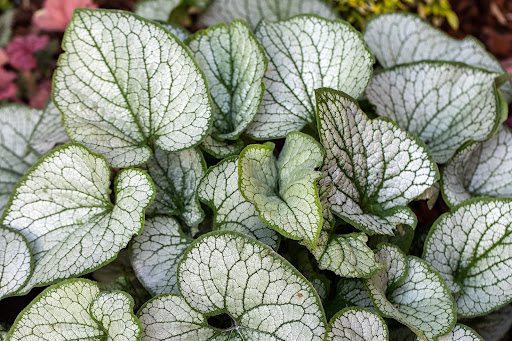
Image of the attractive cream and light-green variegated leaves of one type of deer resistant plants: Brunnera 'Jack Frost.'
Here are some of our suggestions for deer resistant plants that can be used successfully in your landscape in the Pacific Northwest:

Deer Resistant Shade Plants

Brunnera ‘Jack Frost’

This sun to shade-loving perennial works well in a variety of soils and has some tolerance for dry shade. It has attractive cream and light-green variegated leaves. The delicate, tiny mid-blue flowers hover above the foliage in spring, brightening up the shade. ‘Jack Frost’ works great as an edging to borders, mixed with ferns and other woodland plants.

Daphne ‘Eternal Fragrance’

This Daphne is special because it is summer-blooming, and ‘Eternal Fragrance’ refers to it’s delicately perfumed pale pink blooms which recur through spring, summer, and fall. Plant in rich, well-amended soil and water moderately. This shrub is toxic to deer and therefore a great deer resistant plant pick. It grows slowly to only 3-4’ tall and 4-5’ wide. It is a great choice for smaller urban gardens and Asian-themed gardens.

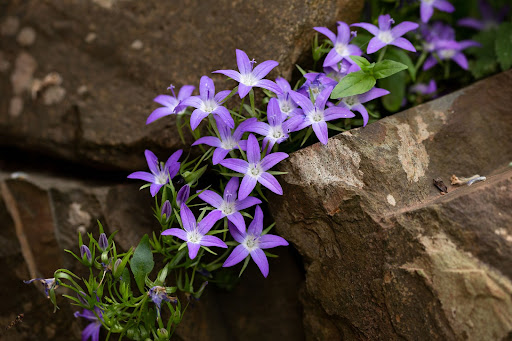
Image of the purple flowers of the Campanula or bellflower, one option of deer resistant plants.
Campanula species

These are sometimes called bellflowers due to the shape of the flowers. There are many varieties, from groundcovers to upright perennials, and they often thrive in shady conditions, although some prefer the sun. They usually have blue, purple, or white flowers, with long bloom times, and will easily brighten your perennial or rock garden. They prefer moist, well-drained soil.

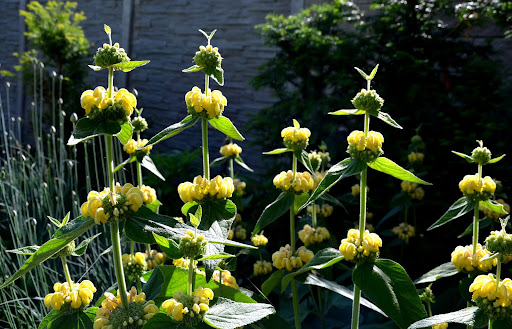
Image of the cheerful yellow flower whorls along the green foliage of the Phlomis russeliana, one of several deer resistant plants.

Deer Resistant Sun Plants

Phlomis russeliana

Also known as Turkish or Serbian sage, this plant is a great choice for a sunny spot in your mixed perennial border. It has attractive, soft, fuzzy white or green foliage and sends up flower spikes of cheerful yellow flowers, arranged in whorls along the stalk. It grows up to 3’ tall and wide. Phlomis is a low-water/drought tolerant plant that attracts pollinators.

Lupinus Species

Lupines work great in mixed borders with shrubs and other perennials. Their flower spikes bring structure and beauty to a landscape. They work well in mixed perennial and shrub borders and cottage garden style landscapes. Lupines bloom in various colors – blue, white, pink, yellow, and purple – and vary in size, averaging around 3’ and 2’ wide. This plant attracts pollinators and makes wonderful cut flowers. They need well-drained soil to thrive and even soil moisture. Add them to your deer resistant landscape.

Contact Frontier Landscaping to plan your deer resistant garden and other landscaping projects.