In a year when winter has been particularly long, cold, and wet, it’s not unusual to enter spring with a distressed lawn. The high pressure produced by intense winter conditions creates a lot of opportunities for pests and diseases to move in and cause problems.
Here are a few common issues we observe in the Clark County and Portland metro area. If you’re seeing bare patches, brown patches, or circular patches of pink or white, you may be facing one of the following:
Red Thread
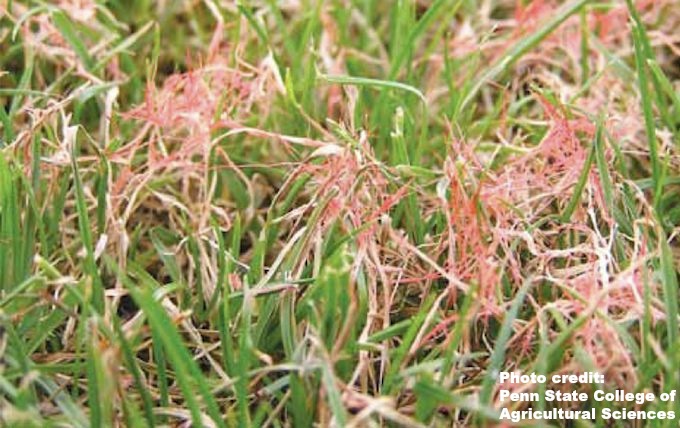
Red thread, or Laetisaria fuciformis, is an opportunistic lawn disease. Its name comes from thin red strands this fungus sends out from the tips of infected grass blades. If your lawn and soil isn’t well drained, a wet winter can throw the door wide open for problems due to this infection. Prolonged exposure to moisture is the primary cause of red thread in unhealthy turf.
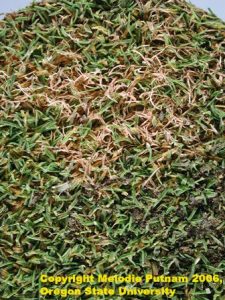
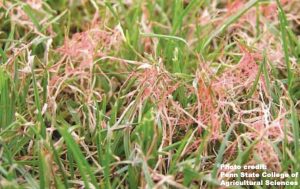
From a distance, you may notice circular patches of pinkish grass ranging up to 8 inches in diameter. It’s important to take a closer look to see if ‘threads’ are present, though, as there are similar symptoms that result from other kinds of issues.
The good news is that red thread does not destroy grass roots and crowns. There is potential for full recovery if you commit to thorough treatment. The best way to ward off future infections of red thread is by conditioning your soil, providing good drainage, and sticking to a proven, consistent maintenance plan.
Pink Snow Mold
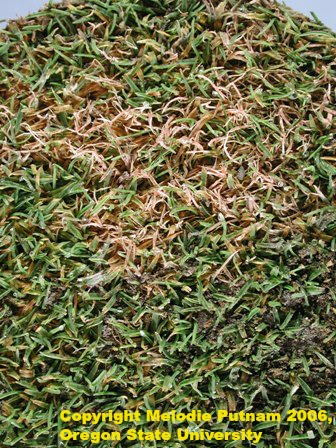
Pink snow mold, as its name implies, is associated with extended snow cover. Like red thread, it’s caused by a fungus, Microdochium nivale. Pink and white foamy fungal spores sit on top of infected grass blades, creating pink circular splotches across the lawn. In a prolonged wet and snowy winter, it can result in severe damage to turf.
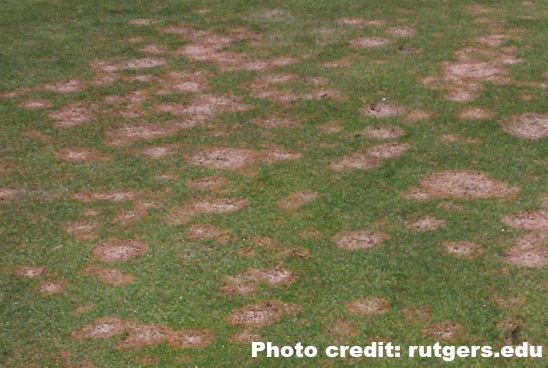
The road to recovery begins with skilled thatching and aeration. Committing to best practices for fertilization, drainage, snow management, and pest control is the key to keeping damage from snow mold to a minimum, whatever future winters may bring.
Crane Fly
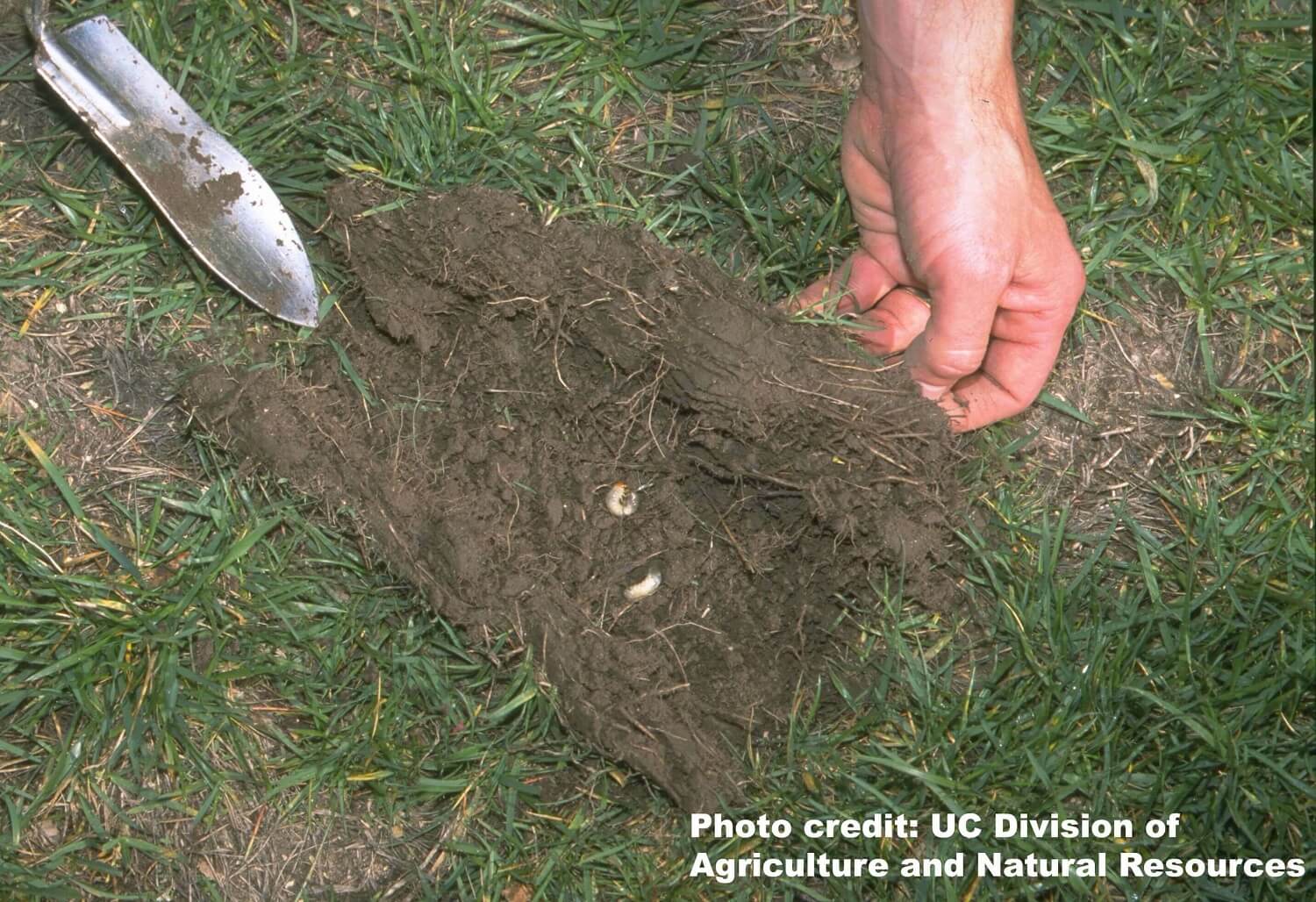
Crane fly infestations are notorious for their potential to kill an entire lawn. While adult crane flies swoop and fly around the yard, it’s the eggs they lay down that spell serious trouble. Crane fly larvae (also known as ‘leatherjackets’) are 1-inch long and tan or grayish white in color. The hungry larvae wreak havoc on turf as they feast on grass roots and crowns.

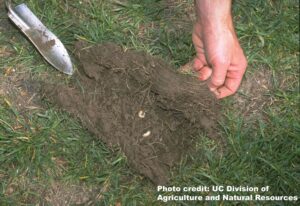
Look for patches of damaged grass that may appear to grow together and spread. Peeling back the soil will reveal whether crane fly larvae are to blame. While a healthy lawn can handle a medium population of larvae, a teeming infestation means it’s time to call for help.
The encouraging thing about battling crane fly is the potential for treatment and full recovery. The crew at Frontier Landscaping has generated impressive results for lawn restoration and would be happy to work with you to save your lawn if you’re dealing with an outbreak this year.
Maintaining healthy turfgrass is the #1 way to prevent future pest and disease issues!
Lawn Rescues and Revamps
In the moist Pacific Northwest, especially after a very wet winter, it’s not uncommon to have problems show up if your soil and grass haven’t been regularly maintained for optimal health.
If you’re in need of treatment, the Frontier Landscaping crew is expertly qualified to help you back to a thriving, healthy lawn. The process we have developed through years of local experience consistently produces successful, healthy turf.
Aeration
Aeration is a generic term for exposing soil to the air by removing plugs of soil from the turf. The openings created by aeration help water and nutrients move more easily through the soil.
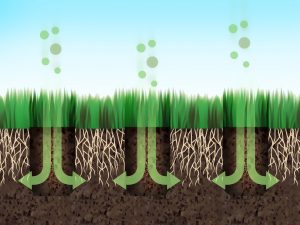
While it’s common practice to leave soil plugs in a lawn after aeration, the crew at Frontier Landscaping has determined that the most successful lawns are created when we pick up and dispose of the hardened plugs. This additional step allows topdressing to better penetrate the new holes in the soil, enhancing the entire aeration process overall. While it is a greater effort, this step has consistently shown itself to be an effective key to helping sick lawns bounce back quickly and look better than ever.
Additional benefits of aeration:
- Limits fertilizer runoff
- Improves ability to absorb water
- Slows buildup of thatch
- Builds strong root system and layer of topsoil
Frontier Landscaping recommends aeration once each year for all lawns to maintain great health.
Reseeding and Fertilization
Once soil has been aerated, ¼ to 1 inch of rich soil conditioner is applied. This mix works down through the new holes left by aeration and sets the lawn up for improved future drainage.
Why does this matter? Good soil texture promotes healthy turf. In turn, healthy turf is significantly less susceptible to disease.
Once soil has been treated, your lawn will be ready to be reseeded and fertilized. It’s not uncommon to see new grass emerging within a month of completion.
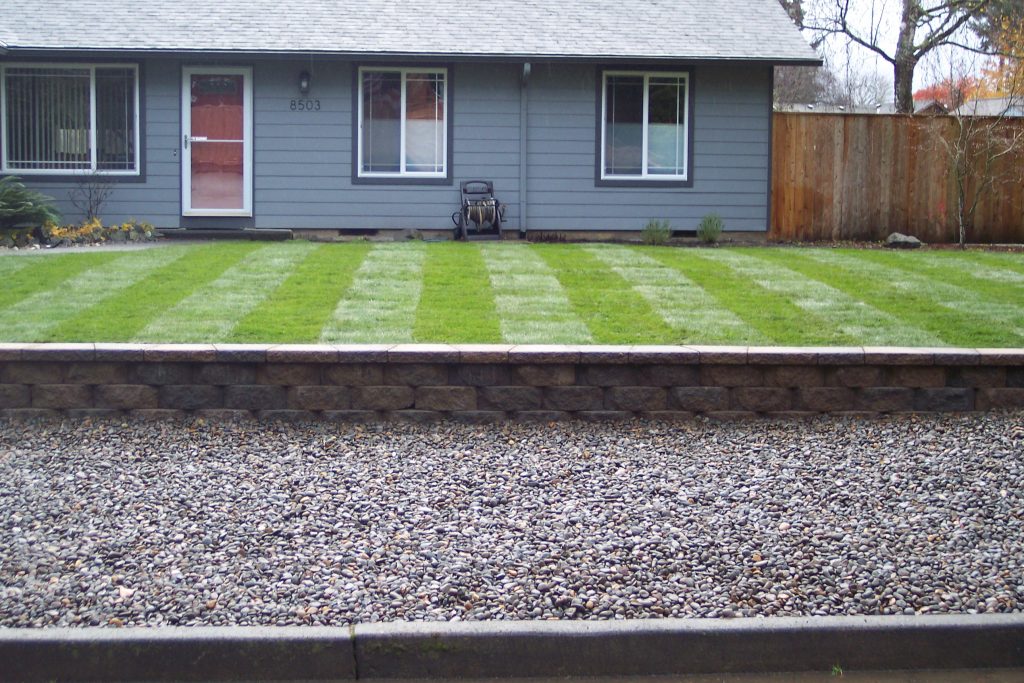
Intense seasons of wet weather can result in significant pest and disease pressure on lawns, especially if the grass isn’t robust and healthy to begin with.
If you find yourself facing ugly bare spots, remember that many issues are treatable if caught in time. Give us a call to learn about treatment options for your lawn. We’ll help you through and are happy to design a custom care plan for the future based on the specific needs of your landscape.
Ready for a winter lawn rescue? Call (360) 574-8979 or send us an email to arrange a consultation today.
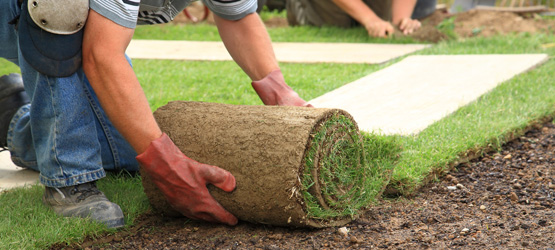
Curb appeal is a big deal to home sellers and homebuyers, but the thrill of a great landscape isn’t exclusive to folks on the move. If you’re comfortably settled and like your location, landscape renovations give you the opportunity to reinvent the look and feel of your home without buying a new house.
When you’ve lived in your home for a few seasons, you’ve had time to realize what works well and what doesn’t in your landscape. You’ve seen the places in the yard that are problematic. Do any of these sound familiar?
- Lawn and driveway spots that fill with puddles
- Sun beating down (or wind roaring through) bare spots in the yard
- No outdoor seating or inviting recreation areas
- Overgrown shrubs and trees that bend or break under the weight of winter weather
- Sickly or moss-invaded lawn
- No privacy
- Boring views
A landscape renovation is doubly gratifying when you’re solving irritating problems and adding beauty and function to the home you love. Here are three approaches to getting a refreshing new house feel without packing a single box.
Out With the Old
Are existing plants or shrubs sick or overcrowded? Are they unattractive? Maybe they’re simply too high maintenance for your busy schedule. Getting rid of overgrown plantings creates a clean look, encourages healthy growth of what’s left, and helps control pest problems.
Update and Upgrade
Decks and Patios
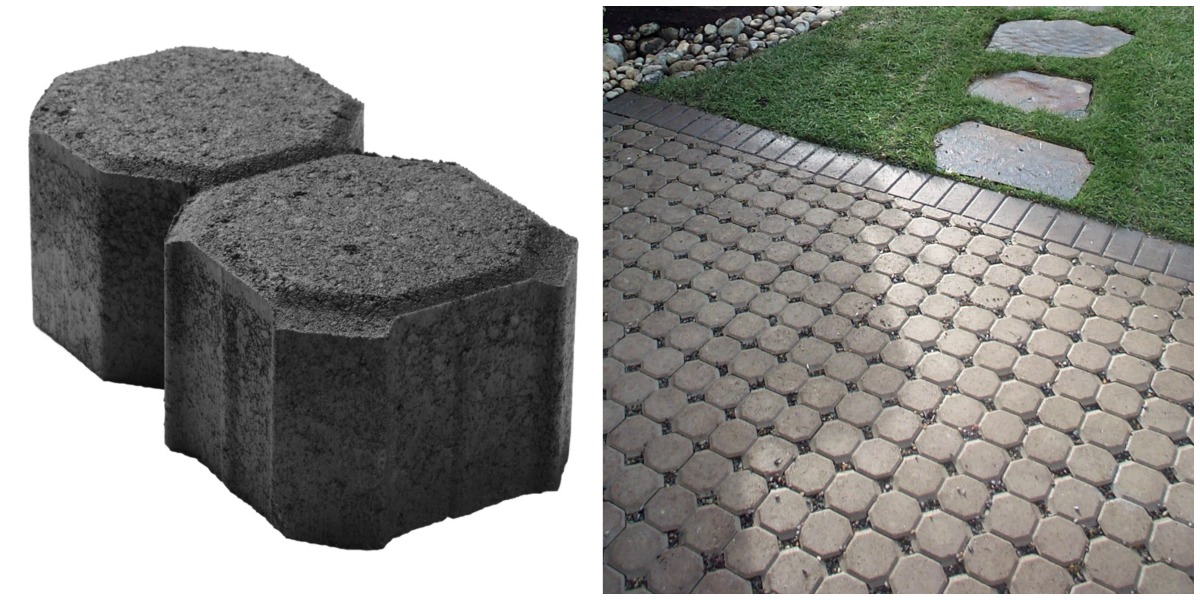
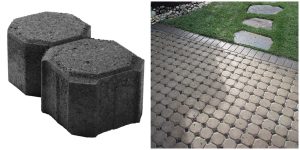
Has a weatherbeaten deck or concrete patio caused drainage issues for way too long? Exchange it for a paver patio. New eco-friendly materials are available in more colors and shapes than ever before. They’re great for controlling runoff and can enhance the overall look and feel of your home by complementing its style.
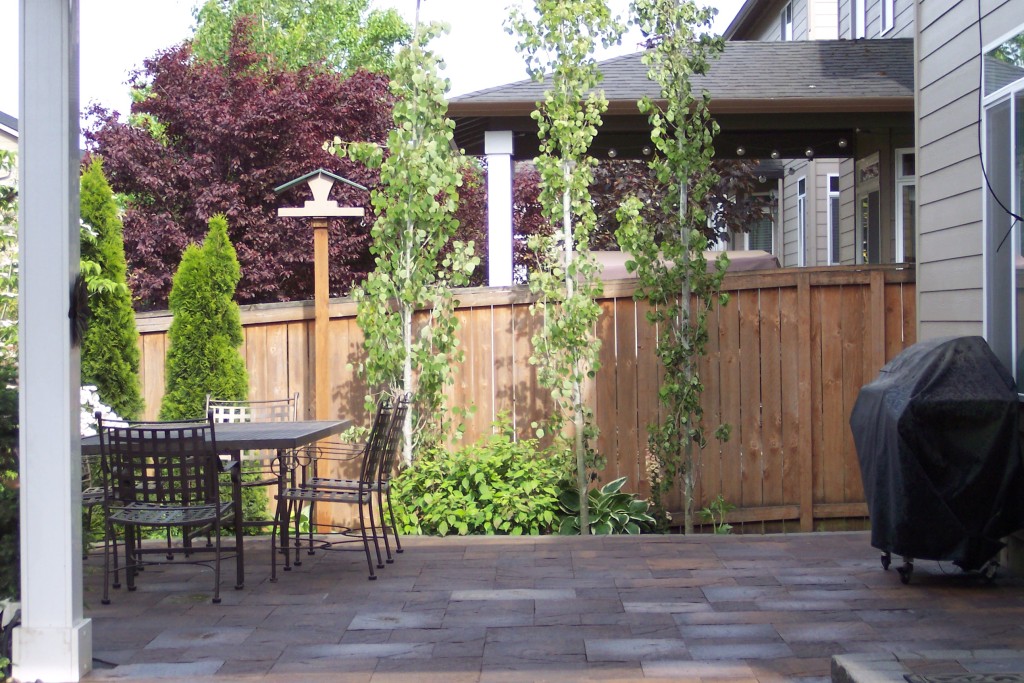
To take full advantage of all pavers can offer, choose a product specifically designed to allow gaps and drainage. Mutual Materials offers a variety of Eco-Priora® and Eco-Stone® options that can be laid in attractive patterns for patios, driveways, and pathways.
Lawn and Plantings
When garden beds are new, it’s easy for excited homeowners to overplant. However, what started as a pretty riot of color can become a tangled, stunted mess as plants compete for the space they need in maturity. Updating your plants by thinning and pruning significantly improves their performance and health over time.
Consider exchanging labor intensive exotic plants for native specimens. They’re naturally adapted to the climate and require little assistance to grow and thrive. Adding pollinator-friendly native plant material is another way to offer an environmentally positive benefit to your local ecosystem.
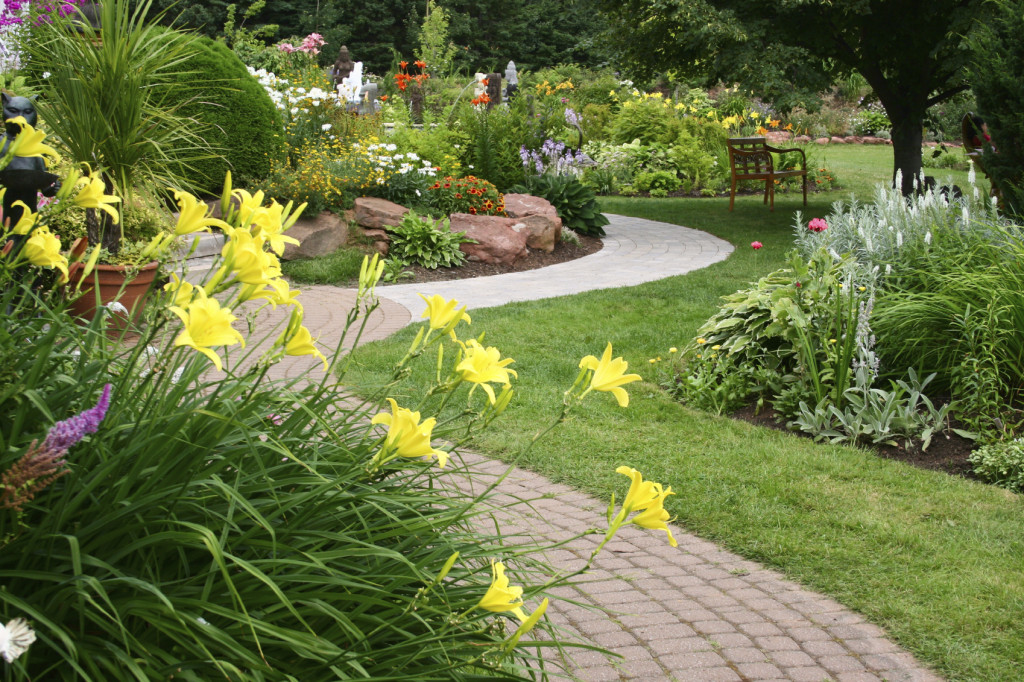
Instead of replacing your lawn, redo it. Green spaces play an important part in maintaining high air quality and a temperate climate. Foot for foot, a healthy lawn will outperform even an eco-friendly paver patio with superior drainage and clean water benefits.
Shrubs and Trees
If your shrubs and trees have been left unattended for their first few seasons, it’s not too late to retrain them for better function and safety. With timely intervention and consistent maintenance, retraining reduces the risk of failure around your home. After all, a well-kept hedgerow is much less likely to buckle and break during the winter time than an overgrown one.
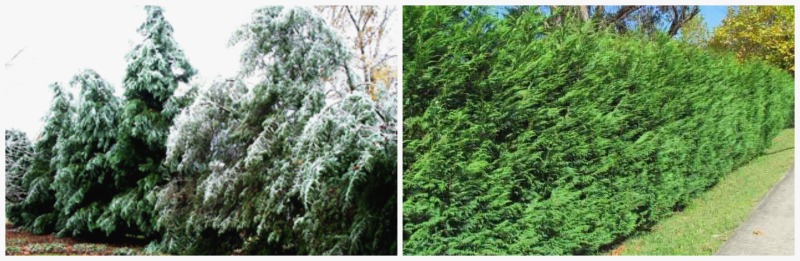
Before and after pruning: Leyland Cypress / Cupressus × leylandii
Example: Leyland Cypress
The mighty Cupressus × leylandii has the unfortunate distinction of being the #1 evergreen that Frontier Tree Service sees split apart due to winter failure. While the problem is based in the tree’s genetics, young Leyland Cypress trees do well when retrained as hedges. Hardier than arborvitae, they make excellent screens as they grow to maturity.
Irrigation
Irrigation technology has come a long way. Nowadays, remote timers and high-efficiency systems offer the most cost-effective and environmentally conscious solution for watering your property. Replace an old ‘spray and pay’ sprinkler system with efficient drip irrigation and a rain sensor to shut off sprinklers when it’s raining to save water. Click to learn more about Frontier Landscaping irrigation services.
Beautiful Additions
While the first years in a new home can be preoccupied with settling in, as time goes on it’s natural to want to more fully express your style on the exterior as well as within. Basic landscapes don’t usually include the richly textured details that take a landscape from ordinary to breathtaking. If you’re ready to really enjoy your views from indoors and out, consider adding structure and depth with one or more of the following pieces:
Are you ready to update your landscape’s look? Frontier Landscaping Inc was established in 1988 for the purpose of providing customers with a full-service landscape experience. We specialize in high-end residential landscapes, but we’re available for projects of any scope and size. Contact us today to talk about transforming your landscape with an attractive, inviting look and feel.

Fan the flames of inspiration by visiting our photo-filled Ideabooks on Houzz – the #1 site in the world for home and landscape renovation ideas:

VANCOUVER, Wa. , Dec 28, 2016 — The National Association of Landscape Professionals (NALP) is pleased to announce the addition of Frontier Landscaping as a participant in the NALP Safe Company Program, sponsored by CNA Business Insurance.
The Safe Company Program is a new safety initiative developed by NALP. The goal: to assist landscape and lawn care companies in their efforts to provide a safe work environment.
Participants sign the Safe Company Pledge that commits them to maintaining an active safety program within their company. Professional companies make safety a priority. They take an active role through safety training and investigation and documentation of job-related injuries. They are expected to comply with all OSHA postings and other regulatory requirements. Additionally, participants pledge to participate in the NALP Safety Recognition Awards Program.
“At Frontier Landscaping, we have a long history of employing highly-skilled specialists. These team members consistently devote hours of study to maintaining their professional certificates. Continuing education is important to all of us. Participating in the new NALP Safe Company Program is an exciting way to continue demonstrating our commitment to safety and best practices in our industry.”
For more information about the NALP Safe Company Program, visit landscapeprofessionals.org, call NALP at 800- 395-2522, or email [email protected].
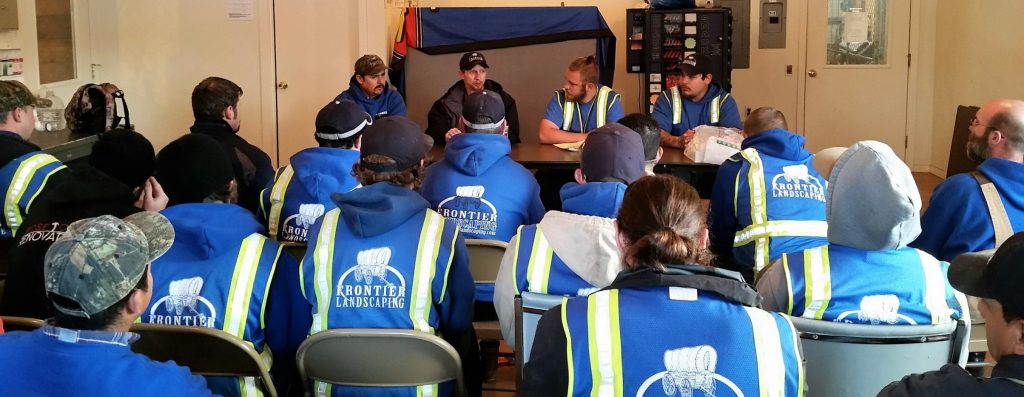
Regular safety meetings are one important way the crew at Frontier Landscaping demonstrates our team’s commitment to delivering the very best responsible, reliable services to the Clark County and Portland Metro communities we serve.
More About Frontier Landscaping
Established in February 1988, Frontier Landscaping, Inc., is a multi-award winning company providing landscape, maintenance, and tree care services for residential and commercial properties throughout SW Washington and the Portland Metro area.
Affiliations
- National Association of Landscape Professionals
- Washington Association of Landscape Professionals
- International Society of Arboriculture
- Building Industry Association of Clark County
- Vancouver Downtown Association
- Washington State Farm Bureau
Certifications and Awards
Best of Clark County 2016
“Albina Fuel Award – Outstanding Corporate Partner” from the Vancouver Downtown Association (VDA)
More About NALP
The National Association of Landscape Professionals represents an industry that employs nearly 1 million landscape, lawn care, irrigation and tree care professionals who create and maintain healthy green spaces for the benefit of society and the environment. For more information, visit LoveYourLandscape.org.
We enjoy working with homeowners who want to use ‘green’, earth-friendly practices in their landscaping. After all, making decisions about land and water use in environmentally responsible ways feels great.
However, we’ve realized that there are some common assumptions about “going green” that are not always on target, particularly with regards to hardscaping. With that in mind, we’re glad to share what we know to help you avoid missteps.
With a little understanding, you can be confident that your results will be in line with your goals for a beautiful, sustainable landscape.
Going Green with Pavers
 Without question, pavers are hugely popular for creating patios, pathways, and even driveways.
Hailed as earth-friendly heroes, they’ve moved into the top spot over concrete for two reasons: they’re available in a wide range of beautiful materials, shapes, colors and sizes, and they are marketed as a solution to handle runoff faster and more responsibly than concrete.
This is true if you use the right paver, but often some drainage is still needed.
While they do allow some water through easily, if you really want to guarantee these benefits in your landscape, you must choose a truly permeable paver for the job. Standard pavers are hard packed with sand and compacted gravel beneath them and product inbetween.
Permeable Pavers Pro Tip
To be sure your patio, pathway, or driveway gets the full advantages pavers can offer, choose a product specifically designed to allow gaps and drainage. While pretty versions of these materials used to be few and far between, innovators in the industry are now offering solutions that are beautiful to look at and effective. Locally, we partner with Mutual Materials to offer a variety of Eco-Priora® and Eco-Stone® options that can be laid in attractive patterns for patios, driveways, and pathways.
Hardscaping and Lawn Loss
Replacing turf lawn with hardscaping is another trend where it’s easy to get tripped up. Hardscaping is dramatic, beautiful, visually interesting, and requires less water use and less maintenance that keeping a lawn. It’s easy to assume that getting rid of the lawn is the right answer.
On the other hand, as more and more property owners are replacing trees and grass with hardscaping on the West Coast, it’s becoming clear that lawns have significant earth-friendly advantages of their own.
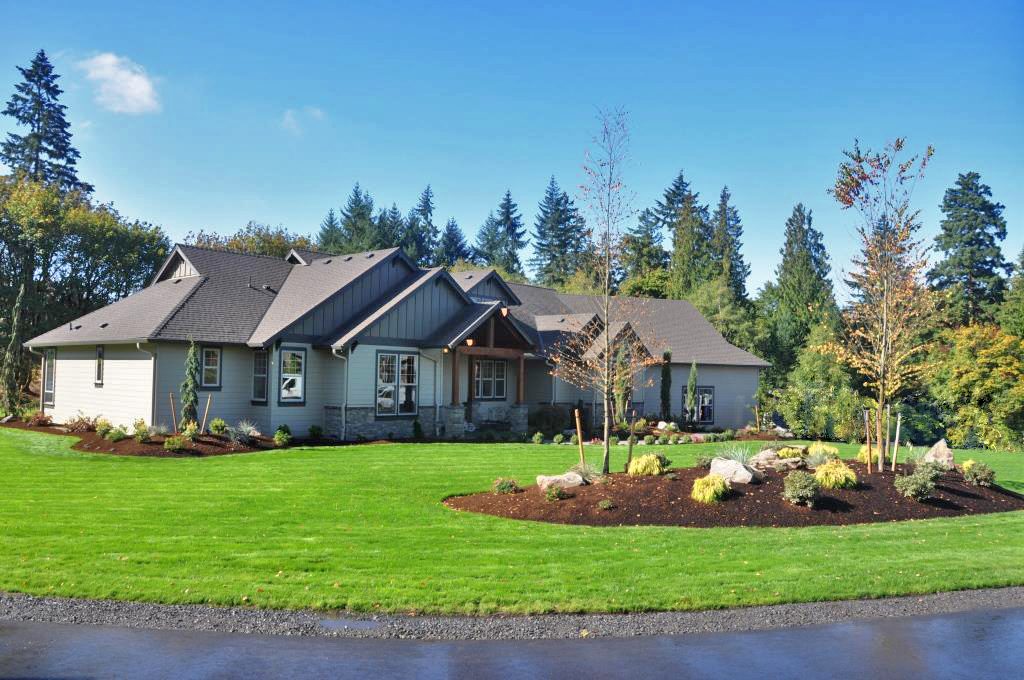
Green spaces and trees absorb heat and clean the air with their intake of carbon monoxide, two of the primary reasons the Pacific Northwest enjoys such high air quality and a temperate climate. Foot for foot, a healthy lawn will outperform even an eco-friendly paver patio with superior drainage and its clean water benefits.
Lawn Loss Pro Tip
Plan for balance, not elimination. Even a small yard can be designed to keep a percentage of everything: lawn, beds, plantings, and hardscaping.
Remember that nearly every element of your residential or commercial landscape can be designed with environmental responsibility in mind. Our expert team loves working with home and business owners to use the best practices available.
Learn More About Going Green In Your Landscape:
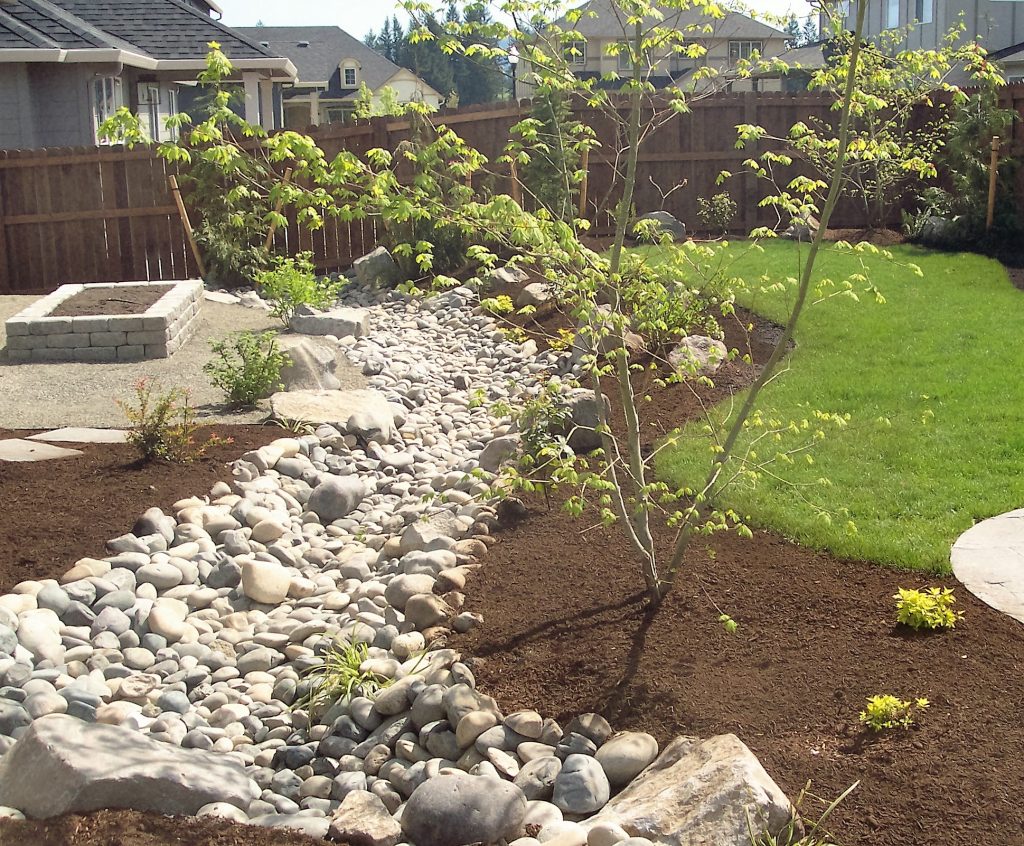
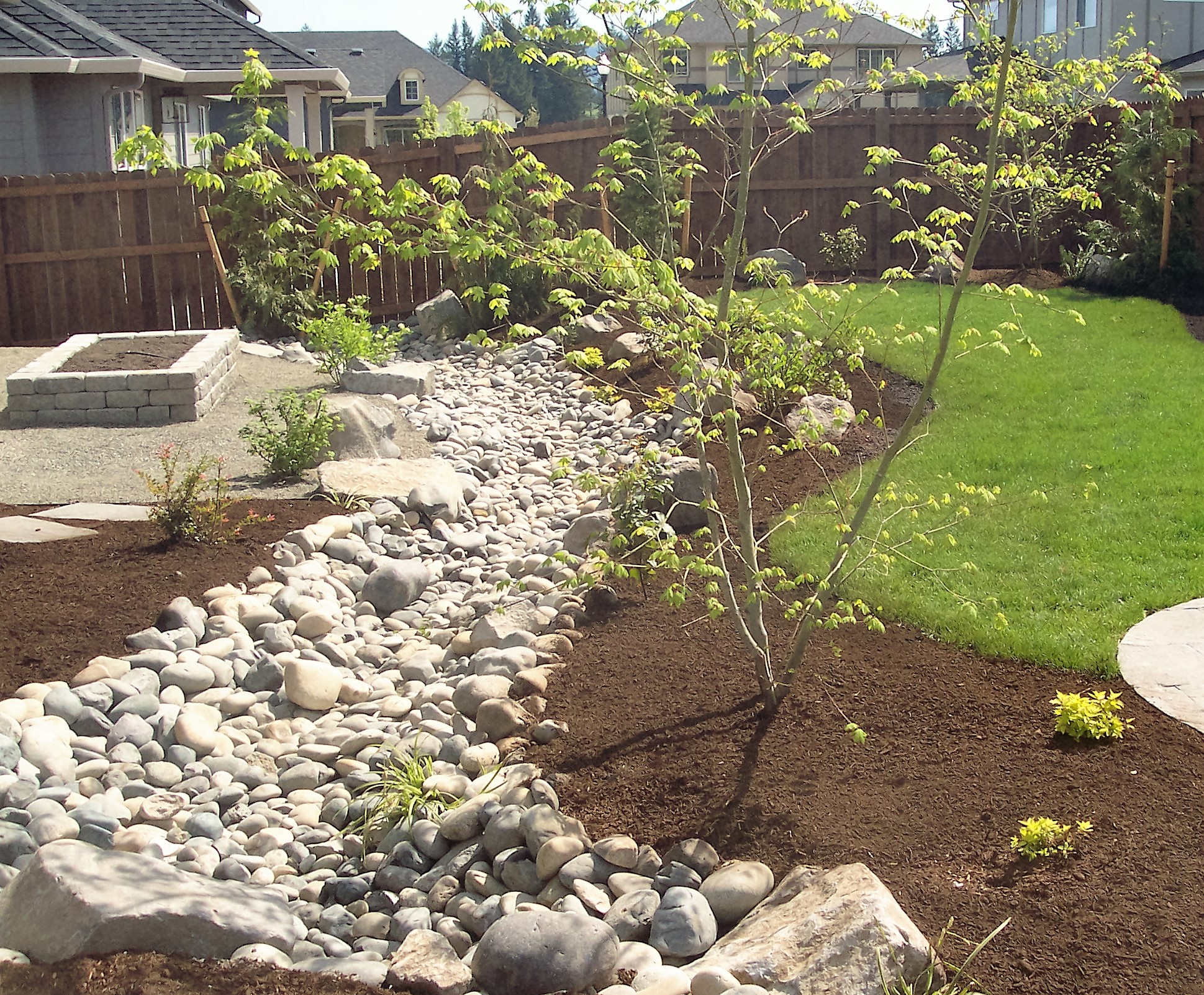
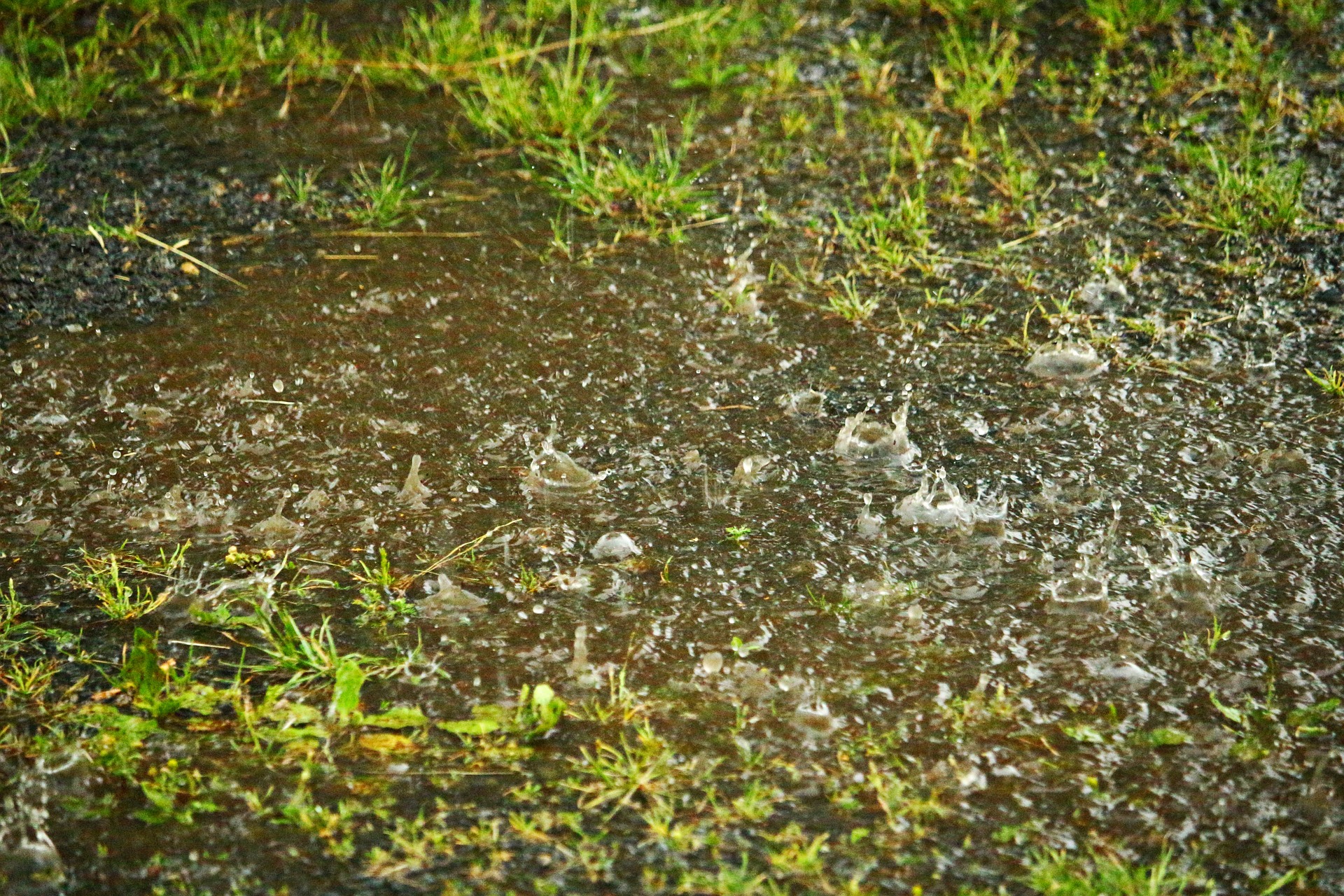
Dry creek beds provide attractive, functional relief, especially if your landscape is plagued by standing water. In the wet PNW, drainage problems are a common headache. Do any of these sound familiar?
- Floo
 ded flower beds
- Pooling water below a deck
- Swampy places in the lawn
- Puddles around a foundation
Leaving drainage issues unaddressed has serious consequences, from dead lawn and plants to costly repairs and decreased property value.
The Good News
Frontier Landscaping has years of experience designing and implementing features that effectively carry water away from problem areas. Dry creek beds are star performers, particularly in sloped terrain. They work twice as hard for a landscape by running water from Point A to B, and standing alone as an attractive feature in drier months of the year.
“Even property owners with no landscape drainage issues may choose to install a dry creek bed due to the elements of natural beauty in the way they look.”
Controlling Water Flow
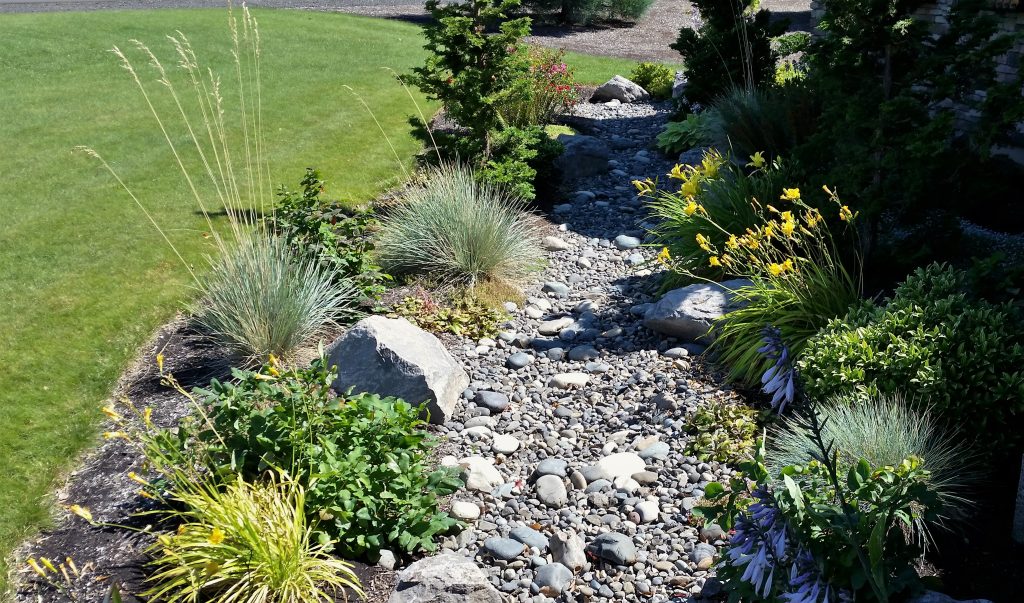
Dry creek beds are an excellent choice for addressing places in the landscape that are hard-hit by heavy rains. While a flat place in the yard may benefit more from a simple lawn drain, gradients and hillsides need the water capacity and speed that a dry creek bed can provide during extreme conditions. Effectively redirecting the flow of water saves you from ongoing erosion and long-term damage.
Water-Wise Gardening
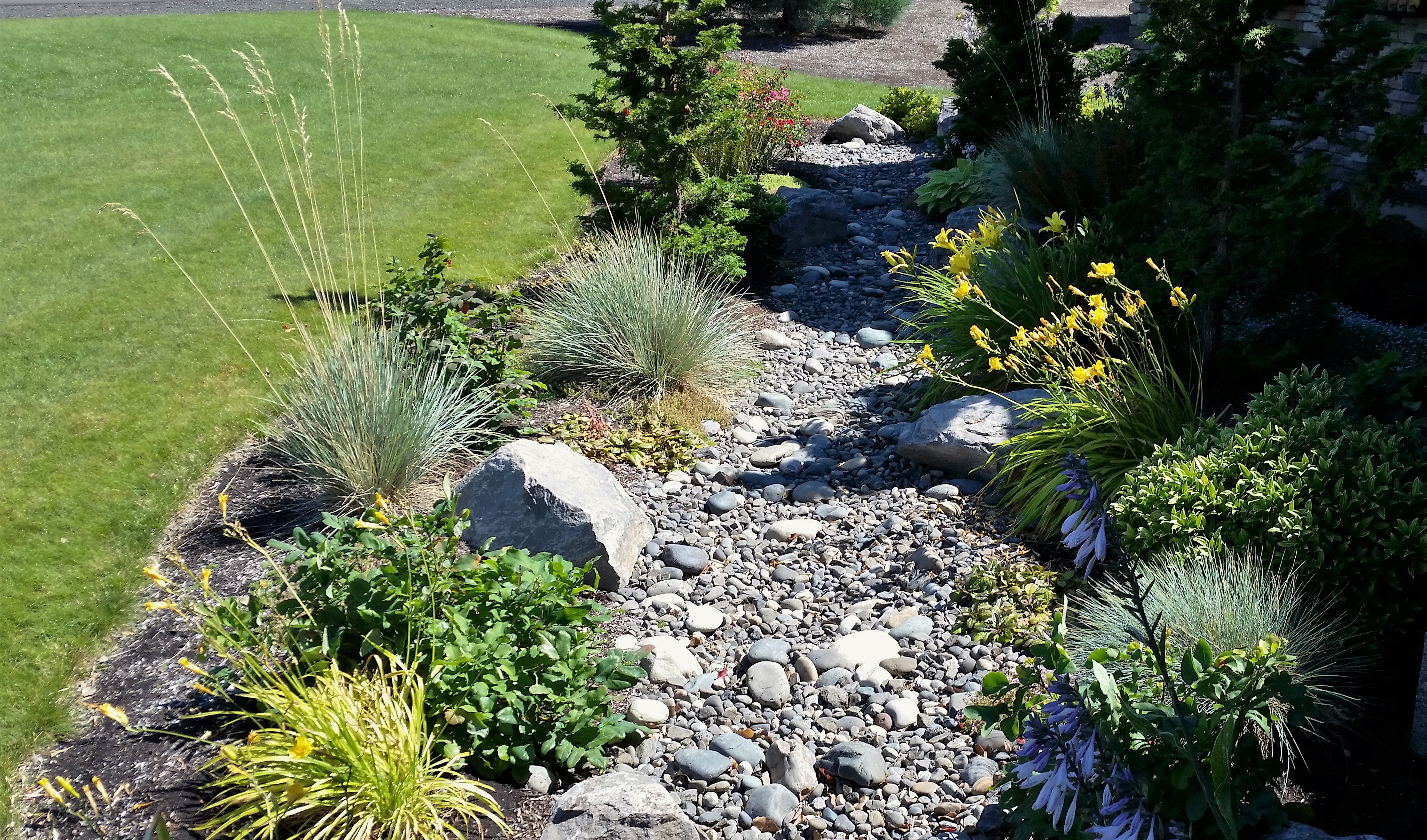
When property owners are looking for a greener way to landscape, dry creek beds play an exciting role. Different-sized rocks, boulders, and choice plantings give eye-pleasing texture to outdoor spaces, but require much less water than an expanse of lawn. While bark dust alone can look flat, a dry creek bed introduces definition and contrast. It’s aesthetically pleasing and earth-friendly — a winning combination.
Dry Creek Beds for Natural Beauty
We regularly install dry creek beds to add natural beauty to a landscape. Expertly balancing a few key ingredients (a natural shape, native plantings, multiple sizes of stone) brings a natural, organic flow to an area. The results are breathtaking in any season, wet or dry.
Additional Considerations
No two landscapes are exactly alike, and the solution that works for one may not work for another. While dry creek beds are particularly suited to slopes and hillsides, they aren’t usually the best choice for flat ground.
Other elements, like French drains, catch basins, and lawn drains also have a part to play — and that’s just the beginning. Frontier’s installation team has years of experience solving drainage problems for local property owners.
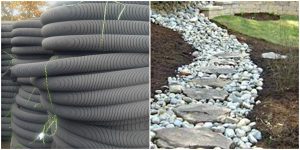
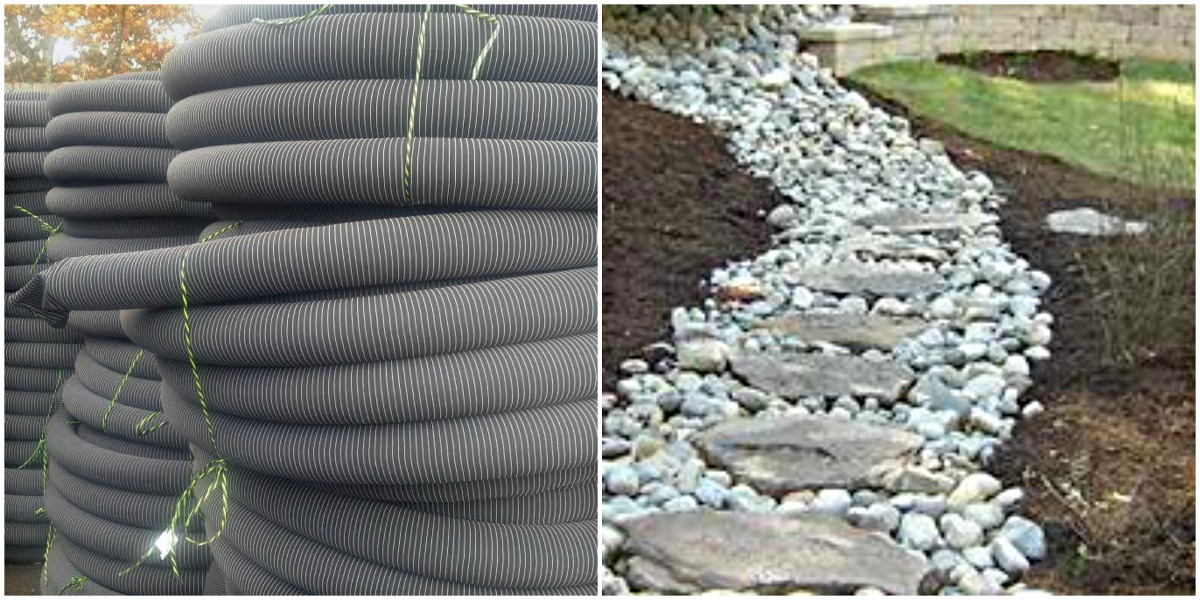
French drain pipe (L), installed as a garden path (R).
French drains are a functional solution for flat terrain and less water. They often have a part to play in designing an overall solution for moving water in a landscape. Read more about them here.
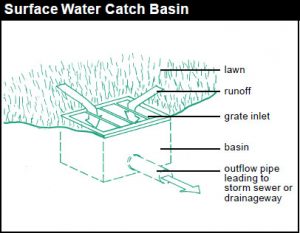
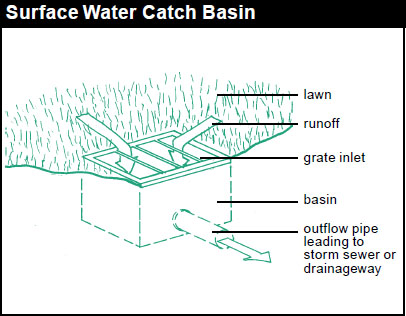
Ranging in size from 6 to 24 inches, catch basins can be square or circular. These grated drains are typically placed alongside a driveway or in a low or sloped spot in the yard or hardscaping, like a patio. This is a straightforward fix for diverting water away from wet spots. A blend of rocks around it allows the catch basin to blend in with the landscape.
From basic to beautiful, there are many combinations of elements we can put to work that provide an effective long-term solution for landscape drainage issues in your landscape.
Ready to learn how can we help you solve your standing water problems? Call (360) 574-8979 or email us for a consultation. We’ll work with you to protect your landscape with the right landscape drainage solutions to meet your needs.
Find more inspiration for dry creek beds and landscape design by visiting us on Houzz!

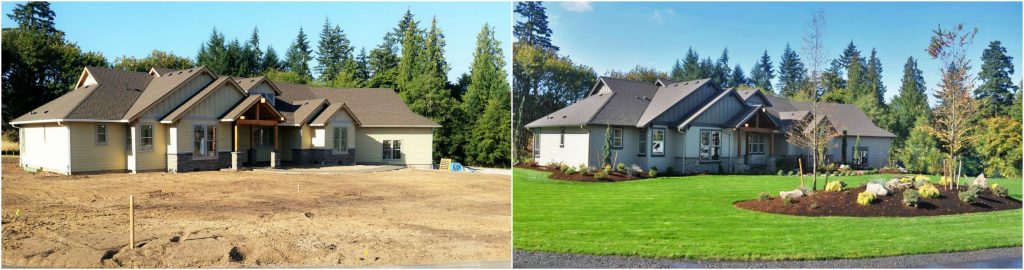
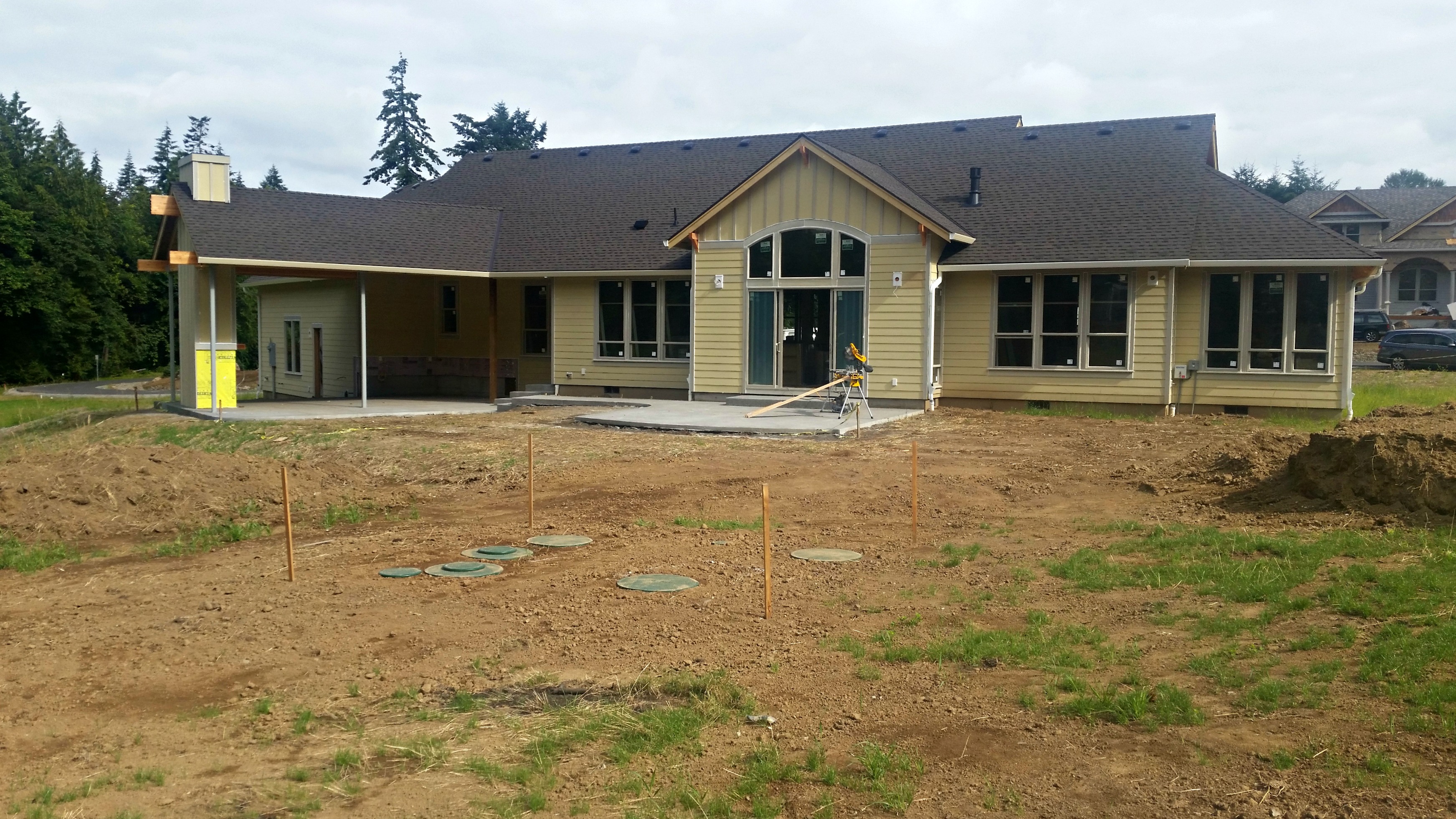
Before and After: 2016 Parade of Homes
We love the ‘wow’ factor of a new landscape. After all, delivering amazing results is a trademark of our business. Does it surprise you to learn that up to 20% of the work that creates these transformations is invisible once the job is complete?
A gorgeous finished project is what you see, but decades of experience lie beneath the surface. Here are six considerations that went into creating our 2016 Parade of Homes landscape in Ridgefield, WA.

We Love Your Dirt
It may not be glamorous, but we’re serious about getting soil preparation right. While choosing plants, lights, and water features is fun, it’s no exaggeration to say that every landscaping success begins in the soil.
For this project, we tilled in 2-3 inches of 3-way soil to improve the existing clay soil. While new county codes require this improvement, we have long encouraged homeowners to take this important step.
Benefits of Soil Improvement
- Helps break down clay
- Provides higher water and nutrient penetration
- Reduces runoff
- Lawn and plants: better structure for root systems, less pests, fewer weeds
Smarter Water
Water-wise irrigation begins weeks ahead of the sprinkler heads you’ll see around a yard. We plan with integrity. Using drip irrigation around shrubs saves money and waste. A rain sensor to shut off irrigation on wet days and nights is environmentally-friendly.
Rain Bird offers a solid warranty on their products and is one of Frontier’s preferred providers. We take advantage of position and ability to purchase high-grade, long-lasting systems for our clients.
After installation, our irrigation specialists remain available to evaluate your yard’s changing needs, including backflow testing, spring startup, and winterization to keep your investment safe.
Ooh-La-Lawns
This gorgeous lawn owes its beauty to our first consideration — improving the soil. With a rich layer of amended soil, lawns and plants will flourish from the start.
Additional considerations to keep things in perfect shape include regular lime and fertilizer application, gypsum, aeration, and more based on seasonal needs. Our maintenance department tailors a care plan to each yard that goes well beyond weed control.
Lighting The Night
LED lighting is applauded for its energy efficiency, but quality design goes beyond illuminating entrances and pathways for security. Artfully-placed uplights bring out texture in trees and rockery, while a well-lit water features adds elegant beauty to nighttime views.
Creative illumination extends a home’s sense of outdoor living long after the sun goes down.
Let Nature Lead
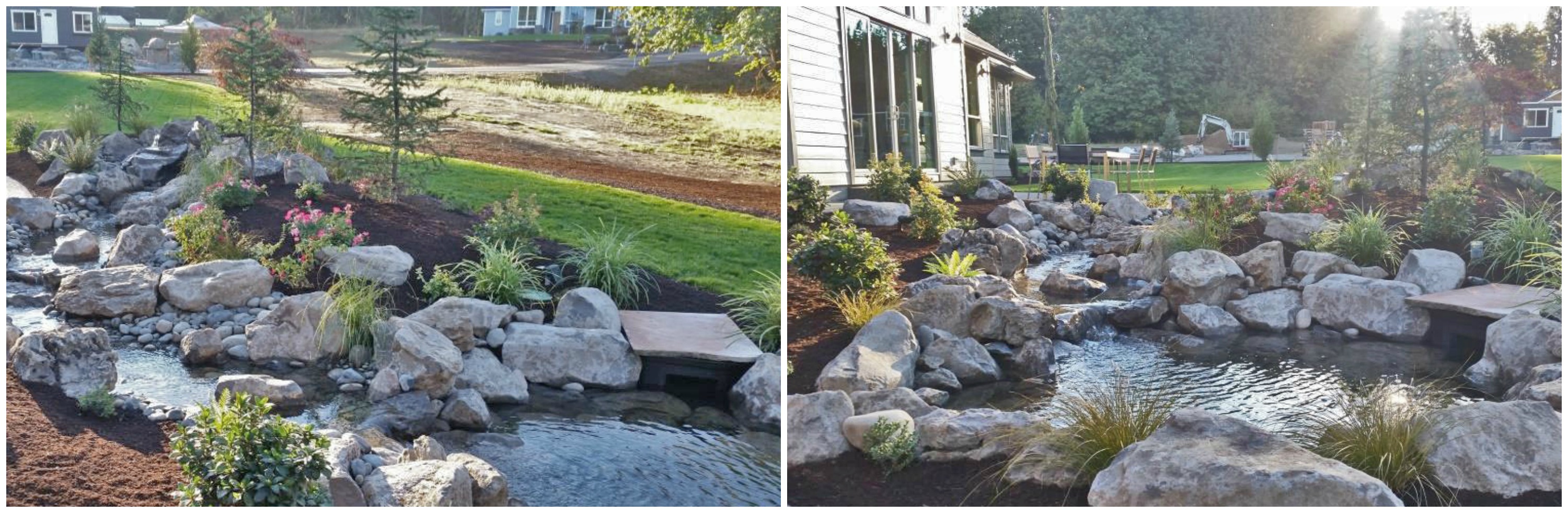
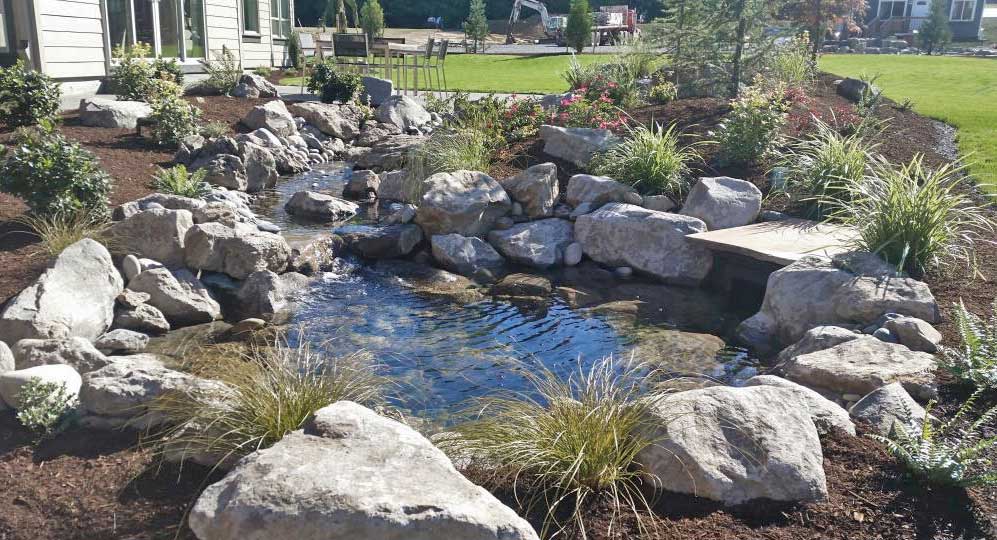
The combination of moving water, textured rocks, and clusters of plants is eye-catching in nature, and we follow suit for creating beauty around a home. This pond, deep enough for fish, is designed with hiding places to protect them from raccoons and birds, while a high-quality filtration/skimmer system keeps things clean.
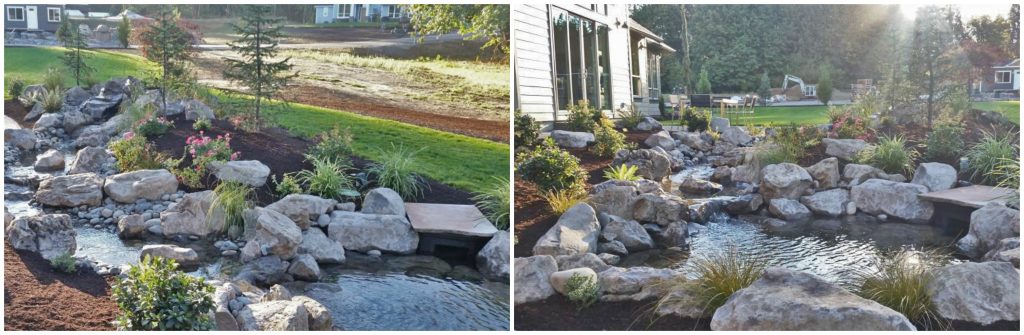
Fresh plantings are carefully spaced to allow mature growth in coming seasons. Use of accent rockery and boulders throughout the landscape gives texture and dimension.
Ever mindful of security, a double-lining and a layer of sand below the base of water features ensures they’re stabilized for long-lasting enjoyment.
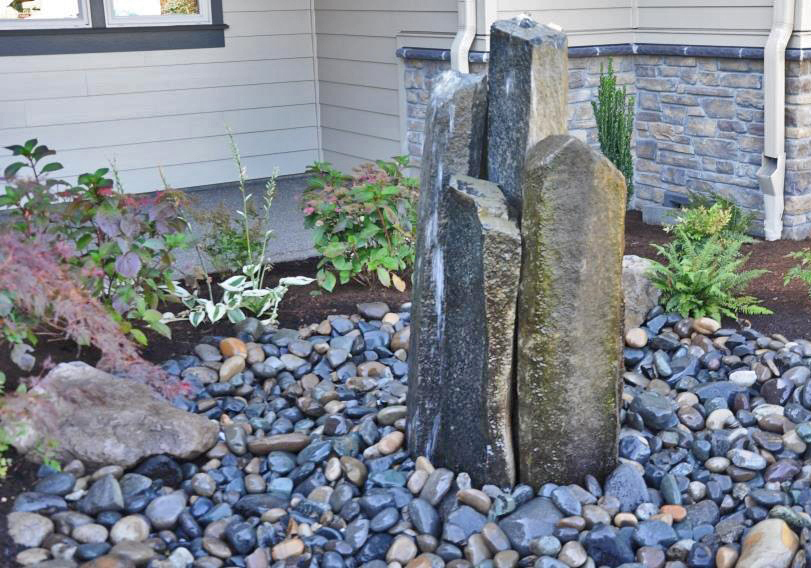
Size matters. We determine the perfect scale to deliver pleasant sights and sounds from water features to the house windows both day and night.
The Crowning Touch
Perfect plant choices bring together beauty and function. Things we are always keeping in mind for a home include:
- Attracting hummingbirds, pollinators, and beneficial insects
- Creating bird habitat
- Screening for privacy
- Protecting from wind
- Softening sharp angles
- Opportunities for edibles and harvests
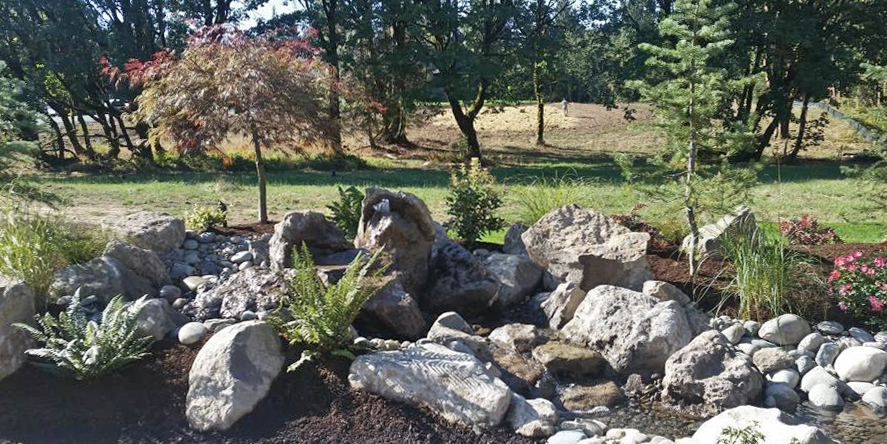
The right plants offer a wide variety of benefits as well as complement a home’s style. The finishing touch is a layer of bark dust. It’s pretty to look at and also suppresses weeds and retains moisture. Low-voltage and LED lighting illuminate trees and flowerbeds so the views are enjoyable in the evenings, too.
Frontier Landscaping Inc was established in 1988 for the purpose of providing customers with a full-service landscape experience. We specialize in high-end residential landscapes, but we’re available for projects of any scope and size.
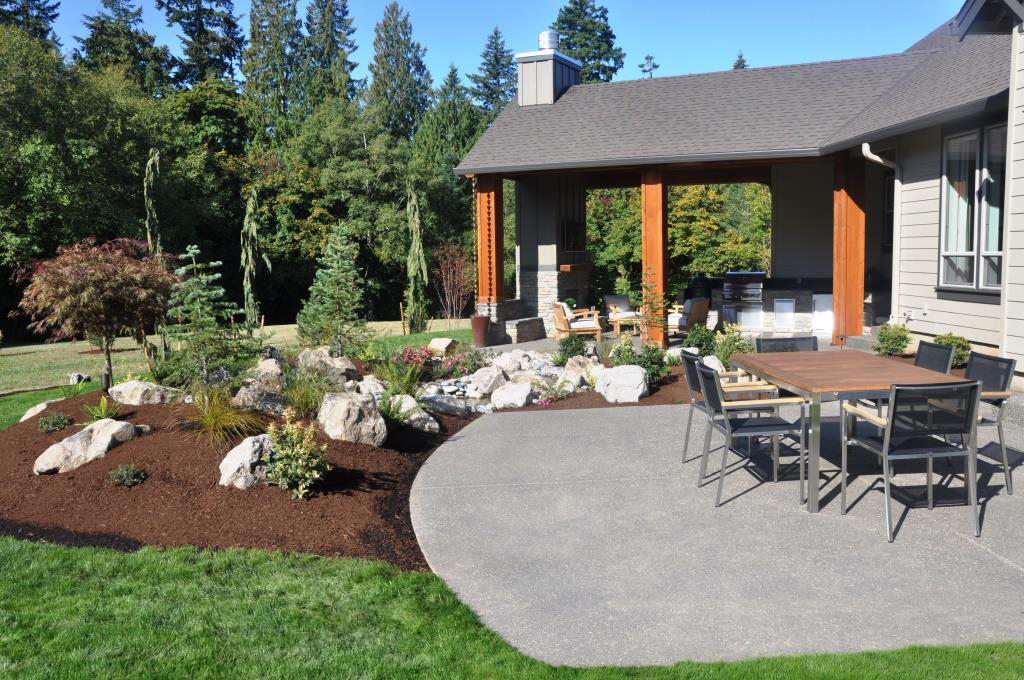
Back Patio – 2016 Parade of Homes
We have been customers of Frontier Landscaping since October of 1995. They did the landscaping on our current home and have maintained it ever since. I can’t say enough good things about the Frontier Landscaping office and crew. They have always been very professional and responsive to anything we have asked for.
We are currently building a new home that will be featured in this year’s Parade of Homes and once again they are doing all of our landscaping. Steve, Shaun and the rest of the crew have really done an excellent job. They fully landscaped 3/4 of an acre that includes two incredible water features, landscape lighting, several beds, sprinkler system, and numerous plantings. Throughout the process they kept me informed, gave me great advice and finished on time! We couldn’t be happier and don’t hesitate to recommend them.
~Shannon and Todd